If you’re looking for a dish that feels hearty yet fresh, comforting yet vibrant, this farro bowl checks every box. Built on chewy, nutty farro and layered with caramelized carrots, sweet dates, briny olives, fresh herbs, and tangy feta, it’s a perfect example of how Mediterranean-inspired cooking transforms simple ingredients into something deeply satisfying.
This farro bowl is plant-forward, flexible, and packed with contrasting textures and flavors. Warm roasted vegetables meet cool herbs and citrus. Sweetness from dates balances heat from jalapeños and acidity from lemon juice. Salty olives and feta bring everything into harmony. It’s the kind of dish that tastes even better the next day, making it ideal for meal prep, gatherings, or easy lunches throughout the week.
Unlike many grain bowls that rely heavily on sauces, this one lets the ingredients speak for themselves. A simple lemon–olive oil dressing softens the onions, ties the flavors together, and enhances the natural richness of the farro. Whether served slightly warm or fully chilled, this farro bowl is equally at home as a main dish or a substantial side.
What Is Farro?
Farro is an ancient whole grain that has been a staple in Mediterranean cuisine for thousands of years, particularly in Italy and parts of the eastern Mediterranean. It refers to several varieties of hulled wheat, most commonly emmer wheat, and is prized for its nutty flavor and pleasantly chewy texture.
Historically, farro was a foundational grain in Roman cooking and remains popular today in soups, salads, and grain-based dishes. Unlike more refined grains, farro retains its bran and germ, which contributes both to its flavor and its nutritional value.
In a farro bowl like this one, the grain acts as a sturdy base that absorbs flavors without becoming mushy. Its slightly toothsome texture contrasts beautifully with tender roasted vegetables and creamy cheese, making it especially well-suited for salads that need to hold up over time.
How to Cook Farro
Cooking farro is simple, but a few small details make a big difference in the final texture and flavor.
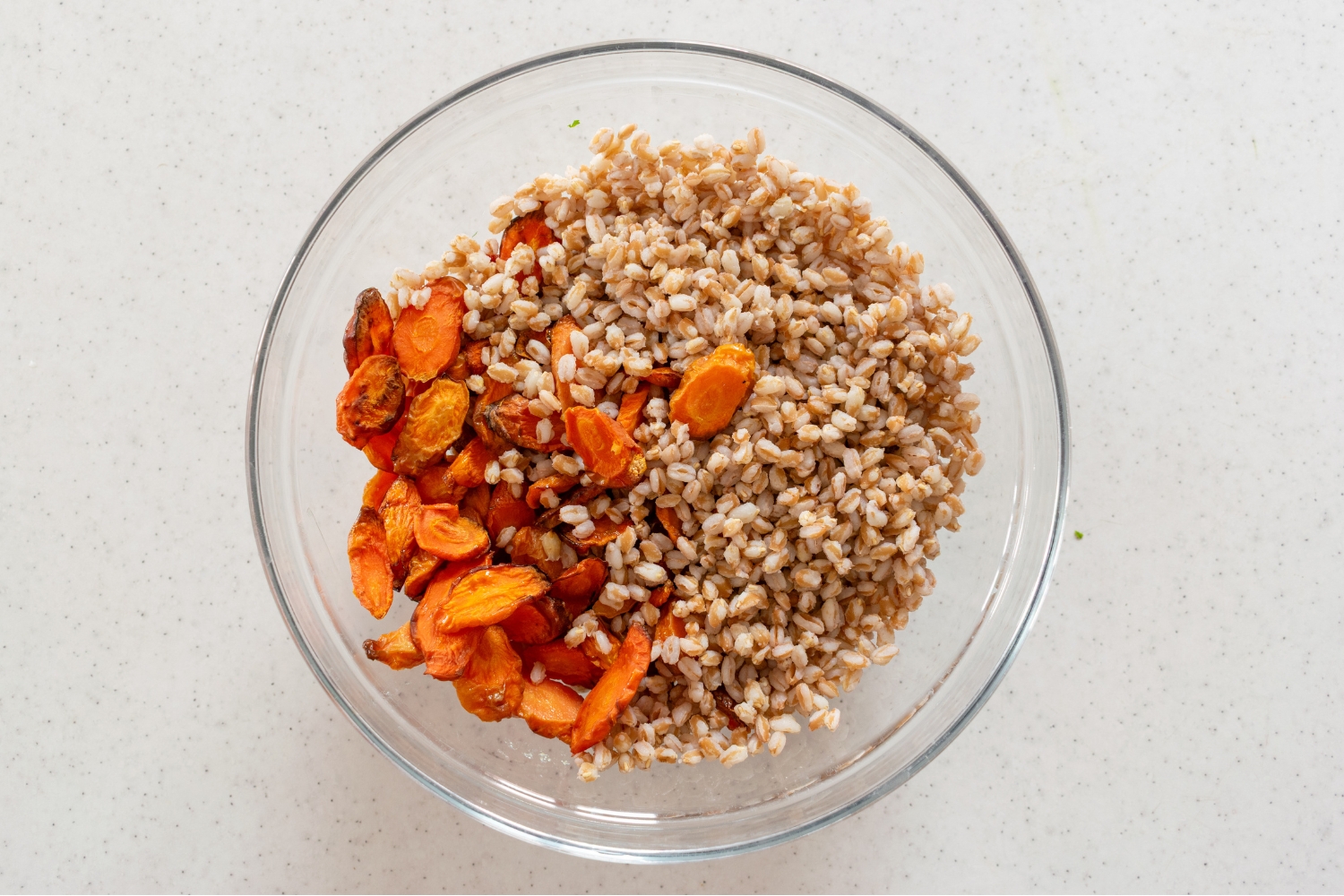
For this farro bowl, farro is cooked much like pasta. A large pot of well-salted water is brought to a boil, the farro is added, and it simmers until tender. Depending on the type of farro you’re using (pearled, semi-pearled, or whole), cooking time can range from 25 to 40 minutes. The goal is tender but still pleasantly chewy.
Once cooked, draining and briefly rinsing the farro helps remove excess starch and prevents clumping. Letting it cool slightly before adding it to the salad is key — farro that is warm but not hot absorbs the dressing beautifully without wilting the herbs or melting the cheese too quickly.
This method produces farro that is ideal for grain bowls, salads, and meal-prep recipes, where texture matters just as much as flavor.
Is Farro Gluten Free?
Farro is not gluten free. Because it is a form of wheat, it contains gluten and is not suitable for people with celiac disease or gluten intolerance.
That said, farro is often better tolerated by some people who are sensitive to highly refined wheat products, especially when eaten in moderate portions and as part of a fiber-rich, whole-food meal. However, anyone who must strictly avoid gluten should choose a certified gluten-free alternative.
Farro Substitute Options
If farro isn’t available or you need an alternative, several grains work well in this recipe.
Quinoa is a popular gluten-free substitute. It cooks more quickly and has a lighter texture, but still absorbs the dressing nicely. Brown rice is another option, offering a neutral base and chewy bite, though it’s slightly less nutty than farro.
Sorghum and wheat berries are excellent choices for those who enjoy very chewy grains. Sorghum is naturally gluten free, while wheat berries, like farro, contain gluten but offer a similar hearty texture.
When substituting, keep cooking times and texture in mind. The goal is a grain that holds its shape and provides structure for the farro bowl.
Is Farro Healthy?
Yes, farro is considered a very healthy whole grain and fits well within a Mediterranean eating pattern.
Farro is rich in complex carbohydrates, which provide steady, long-lasting energy. It also contains fiber, plant-based protein, and important micronutrients such as magnesium, iron, and B vitamins. The combination of fiber and protein helps promote fullness and supports stable blood sugar levels.
Unlike refined grains, farro digests more slowly and contributes to a feeling of satiety after meals. In a farro bowl like this one, it works in partnership with healthy fats from olive oil and protein from feta cheese to create a balanced, satisfying dish.
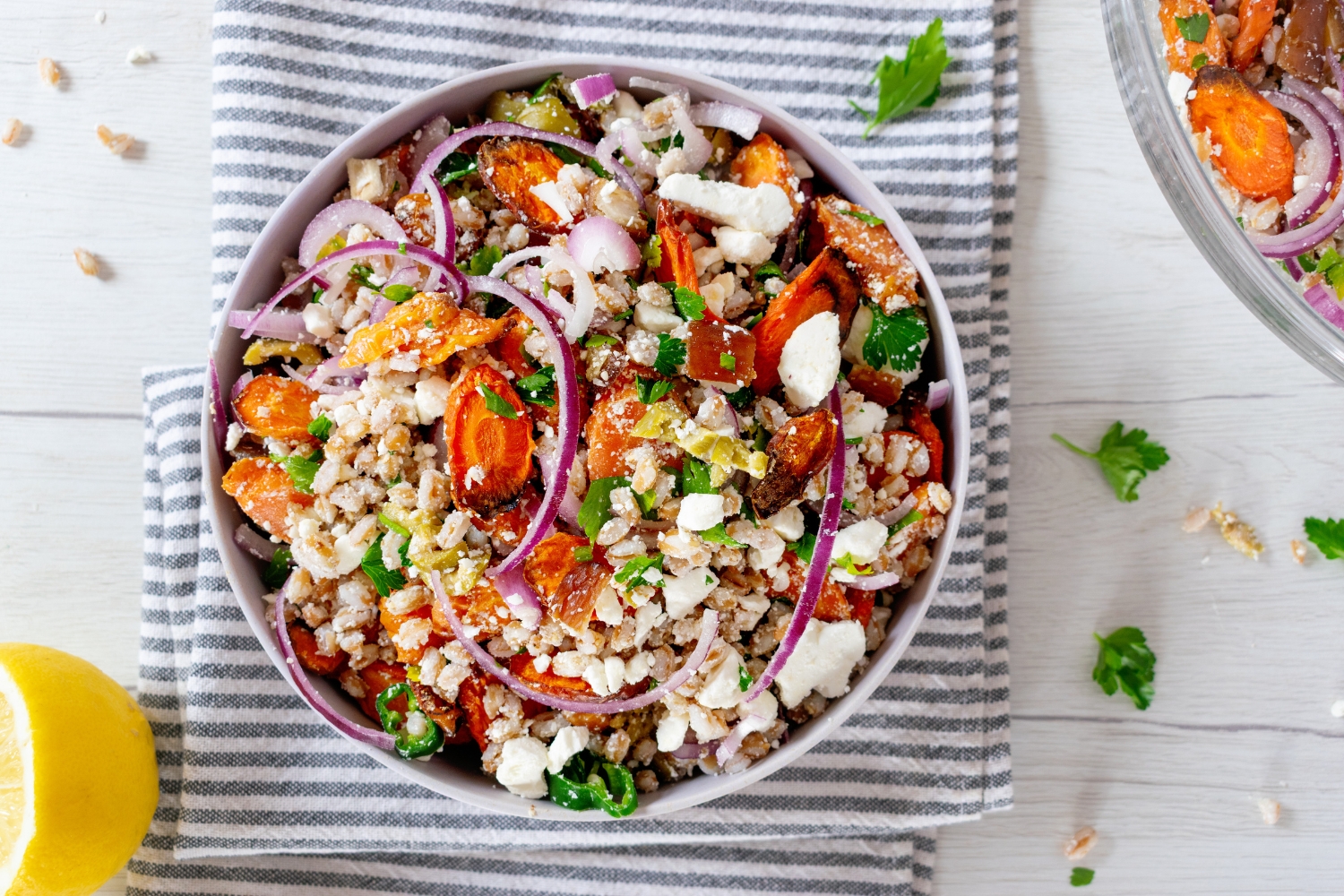
Why This Farro Bowl Works So Well
This farro bowl is carefully balanced, both nutritionally and flavor-wise.
The roasted carrots bring natural sweetness and depth, intensified by high-heat roasting that caramelizes their edges. Dates echo that sweetness while adding a soft, chewy contrast to the grain. Red onion and jalapeño introduce sharpness and heat, which are mellowed by lemon juice and olive oil.
Castelvetrano olives add a mild brininess that’s less aggressive than many olives, making them especially good in salads. Feta cheese brings creaminess and salt, tying everything together without overpowering the vegetables.
Because the components are layered thoughtfully, every bite of this farro bowl feels complete, not muddy or one-note, even without a heavy sauce.
Health Benefits
Whole-Grain Foundation: Farro provides complex carbohydrates, fiber, and plant-based protein, supporting sustained energy levels and digestive health. Whole grains like farro are associated with improved heart health and better blood sugar regulation.
Antioxidant-Rich Vegetables: Carrots are rich in beta-carotene, an antioxidant that supports eye health and immune function. Roasting enhances their natural sweetness while preserving much of their nutritional value.
Heart-Healthy Fats: Extra virgin olive oil is a key component of both the roasted carrots and the dressing. Rich in monounsaturated fats and polyphenols, olive oil supports cardiovascular health and helps reduce inflammation.
Mineral and Protein Support: Feta cheese contributes calcium and protein, which are essential for bone health and muscle function. When used in moderation, it adds flavor without overwhelming the dish.
Mediterranean Eating Pattern: This farro bowl reflects classic Mediterranean principles, whole grains, vegetables, healthy fats, herbs, and minimal processing, an approach consistently linked to longevity and reduced risk of chronic disease.
FAQs
Can this farro bowl be made ahead of time?
Yes. This salad actually improves with time. After a few hours in the refrigerator, the flavors meld and deepen, making it ideal for meal prep.
Is this farro bowl served warm or cold?
It can be served either way. Slightly warm is comforting and aromatic, while chilled is refreshing and great for hot weather.
How spicy is this recipe?
The jalapeños add a gentle heat. For less spice, remove the seeds or reduce the amount. For more heat, leave the seeds in or add extra slices.
Can I make this vegan?
Yes. Simply omit the feta or replace it with a plant-based alternative. The dish is still flavorful and satisfying without cheese.
How long does it keep in the refrigerator?
Stored in an airtight container, this farro bowl will keep for up to four days.
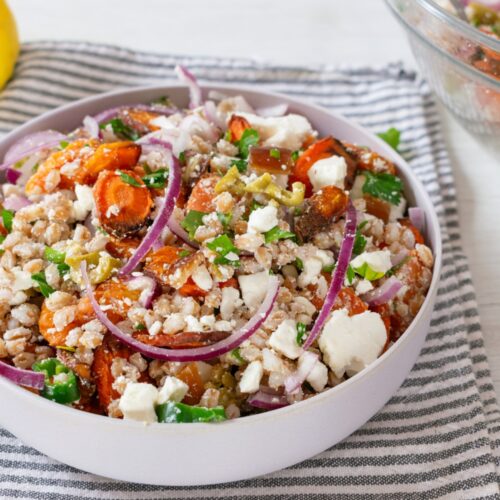
Farro Bowl with Roasted Carrots and Feta
Ingredients
For the Roasted Carrots
- 2 pounds carrots
- 2 tablespoons extra virgin olive oil
- 1/2 teaspoon Diamond Crystal Kosher salt
For the Bowl
- 1 cup farro, uncooked
- 1/2 cup chopped dates
- 1 medium red onion, halved, and sliced as thinly as possible
- 1-2 jalapeños, thinly sliced
- 1 cup chopped cilantro
- 1/4 cup freshly squeezed lemon juice
- 3 tablespoons extra virgin olive oil
- 1/2 teaspoon Diamond Crystal Kosher salt
- 1/2 cup chopped Castelvetrano olives
- 3/4 cup feta cheese, crumbled
Instructions
- Roast the carrots: Preheat the oven to 425°F (220°C). Peel the carrots and cut them on the diagonal into 1/4-inch thick pieces. Toss with 2 tablespoons olive oil and 1 teaspoon salt. Spread evenly on a baking sheet and roast for 45 minutes, until tender and lightly caramelized.
- Prepare the farro: Bring a large pot of well-salted water to a boil. Once the water is boiling, add the farro and cook for 30–35 minutes, until tender. Drain and briefly rinse under cold water. The farro should be warm, not hot, when added to the salad.
- Prepare the dressing and aromatics: In a large mixing bowl, combine the chopped dates, thinly sliced red onion, jalapeños, cilantro, lemon juice, 3 tablespoons olive oil, and 1 teaspoon salt. Stir well and let sit while the carrots and farro cook-this will help soften the onions and meld the flavors.
- Assemble the salad: When the roasted carrots have cooled for about 10 minutes (still warm, not hot), add them to the bowl along with the warm farro. Add the chopped Castelvetrano olives and crumbled feta cheese. Toss gently until all ingredients are evenly combined and coated with the dressing.
- Serve: Serve immediately while slightly warm, or refrigerate for at least an hour to allow the flavors to develop. This salad tastes even better the next day once the ingredients have fully marinated.
Nutrition
About the Author: Jess Haines-Stephan