Caramelized Kabocha Squash with Warm Spices and Yogurt
If you’re looking for a side dish that’s both comforting and vibrant, this Caramelized Kabocha Squash with Warm Spices and Yogurt delivers beautifully. With its tender texture, lightly caramelized edges, and layers of aromatic spice, this dish transforms simple ingredients into something deeply flavorful and memorable.
At its core, this recipe celebrates kabocha squash, a naturally sweet and velvety winter squash that pairs perfectly with bold spices and creamy yogurt. Inspired by North African flavors, it features a fragrant blend of spices, sautéed aromatics, and a cooling yogurt finish that balances the dish.
This recipe also fits seamlessly into a Mediterranean diet approach to cooking. It highlights olive oil, plant-forward ingredients, and balanced flavors, making it both nourishing and satisfying.
Whether served alongside roasted meats or as part of a vegetarian spread, this dish is a standout that feels both rustic and refined.
What Is Kabocha Squash?
Kabocha squash is a Japanese variety of winter squash known for its deep green skin and vibrant orange flesh. Sometimes referred to as Japanese pumpkin, it has a naturally sweet, nutty flavor and a dense, creamy texture when cooked.
Compared to butternut squash, kabocha squash is slightly drier and richer, which makes it ideal for sautéing and caramelizing. It holds its shape well during cooking, allowing the edges to develop a beautiful golden crust while the interior becomes soft and tender.
One of the best things about kabocha squash is its versatility. It can be roasted, steamed, sautéed, or even used in soups and purees. In this recipe, it’s cooked in a skillet, where it absorbs the warm spices and develops a lightly caramelized exterior.
If you can’t find kabocha squash, butternut squash is a good substitute, but if you have the chance to use kabocha, its flavor truly elevates the dish.
How to Make Caramelized Kabocha Squash with Warm Spices and Yogurt
This dish comes together quickly and relies on layering flavors in a single skillet.
Start by heating olive oil in a large skillet over medium-high heat. Once hot, add mustard seeds and allow them to pop, this step, known as “blooming,” releases their flavor into the oil and creates a fragrant base.
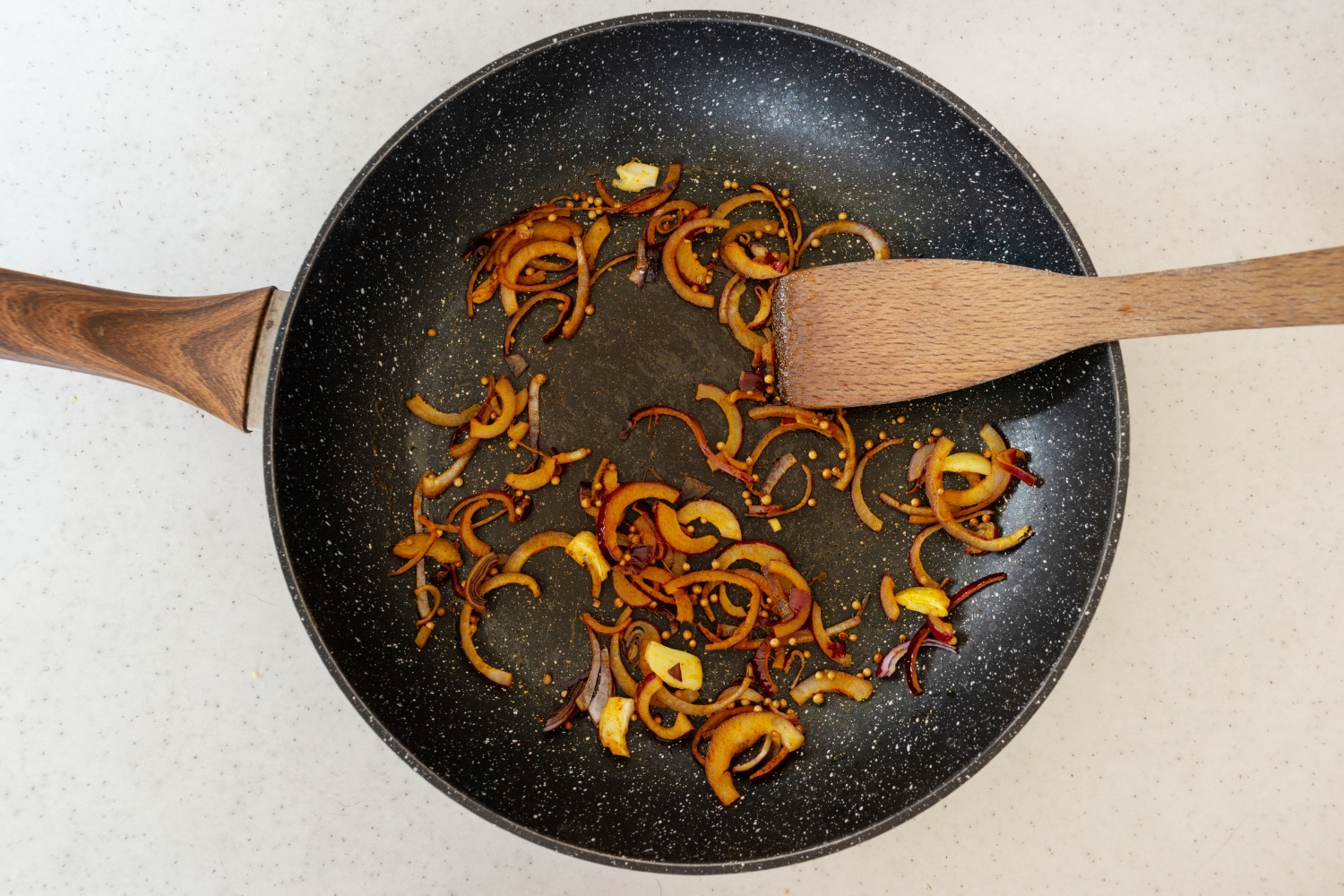
Next, add ras el hanout, sliced red onion, and smashed garlic. As they sauté, the spices toast gently and the onions soften, creating a rich aromatic foundation.
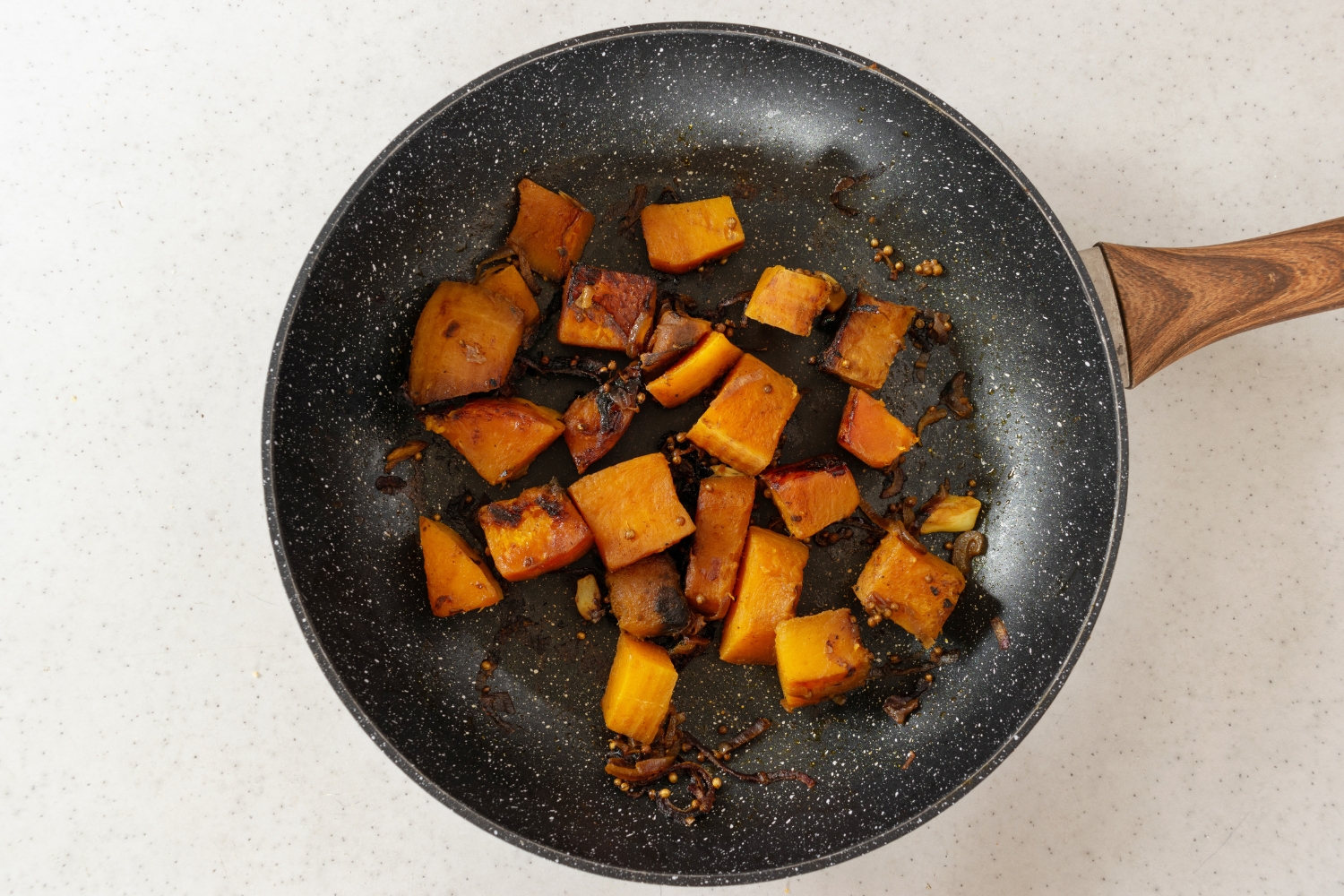
Then it’s time to add the kabocha squash. Let it cook undisturbed for a few minutes so it can begin to brown. This step is key to developing that caramelized flavor that makes the dish so special.
Once the squash has lightly browned, add a small amount of water and salt. Cover the skillet and reduce the heat, allowing the squash to steam gently until tender. This combination of browning and steaming ensures the kabocha squash is both flavorful and perfectly cooked.
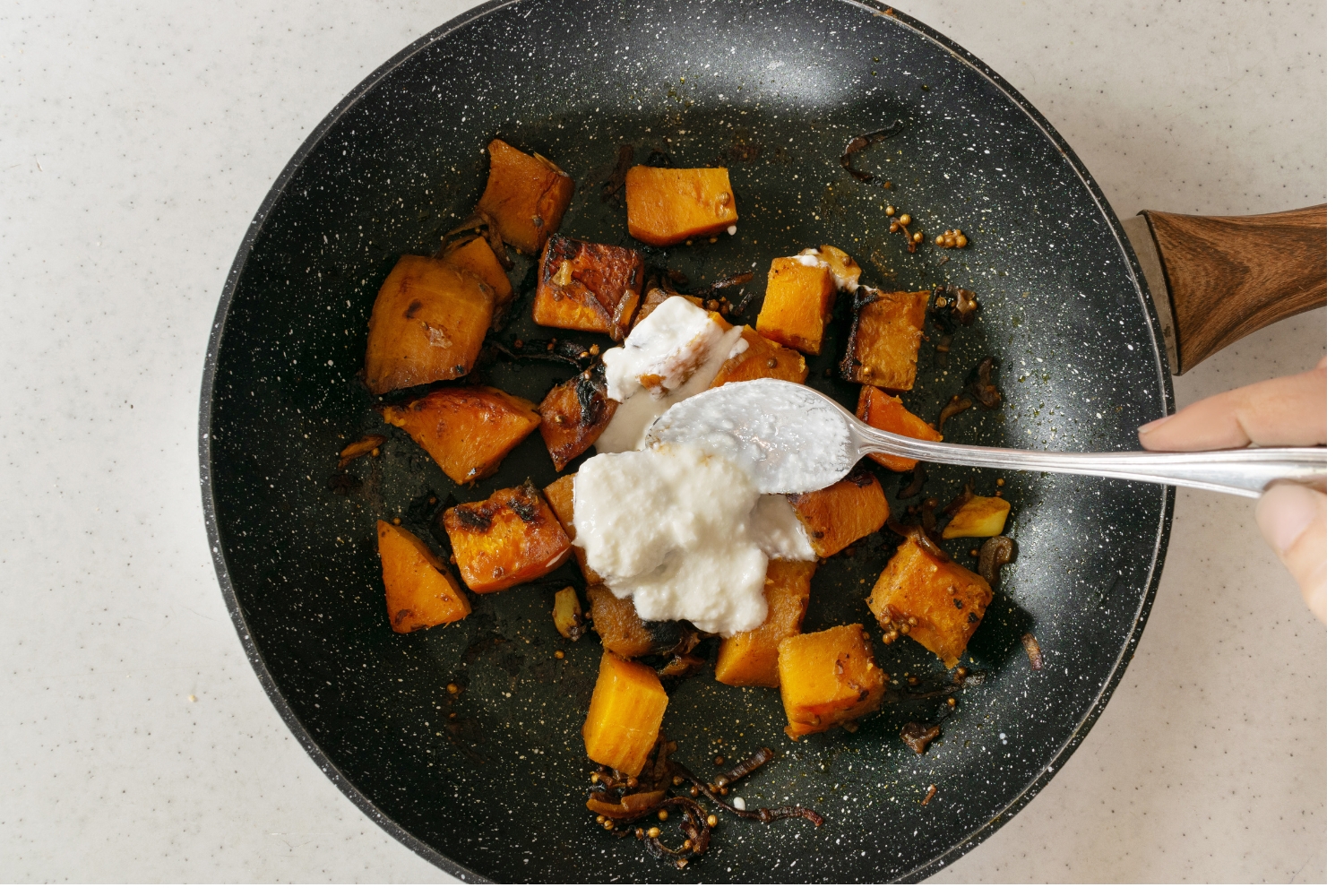
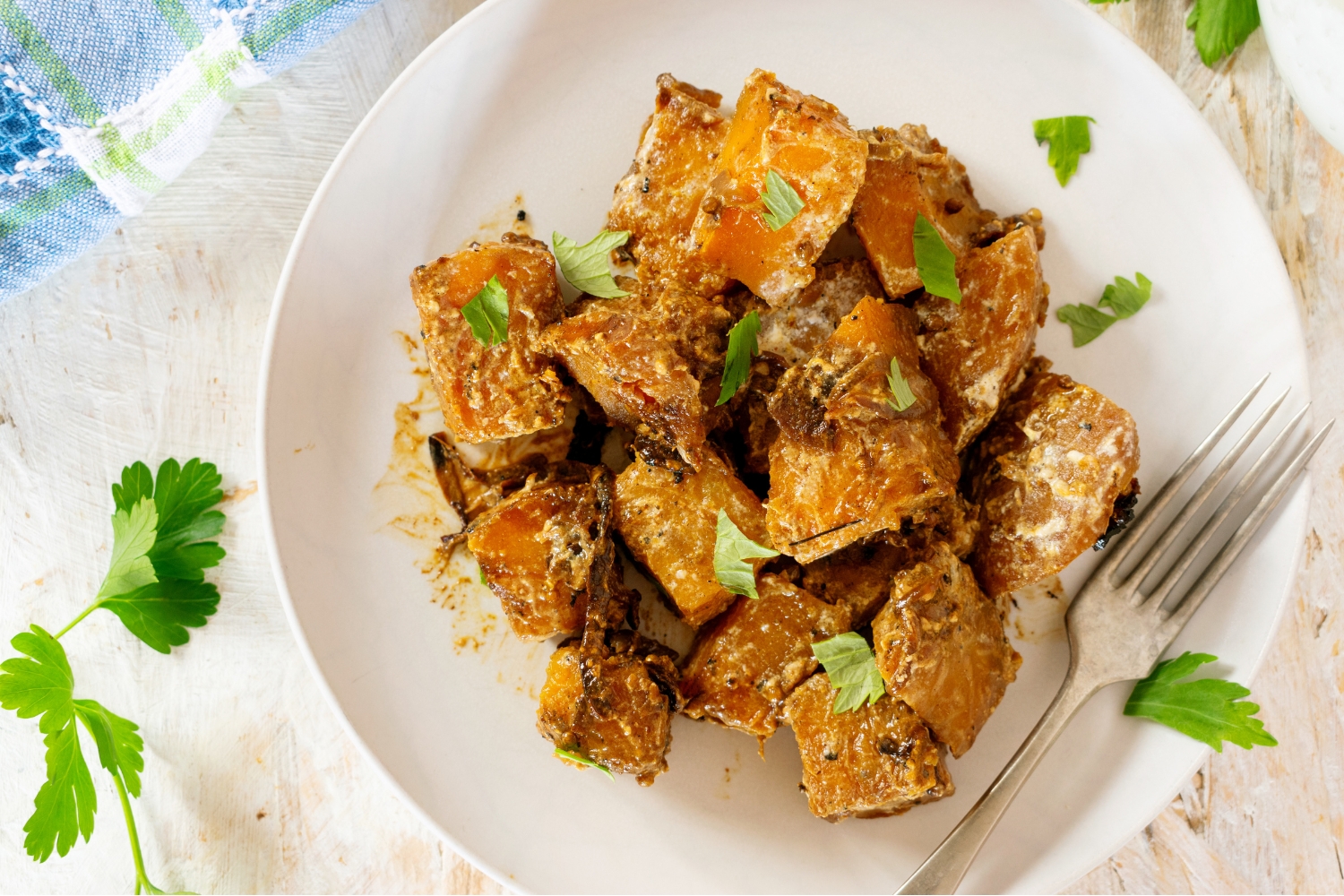
To finish, stir in Greek yogurt, which melts into the dish and creates a light, creamy coating. Garnish with chopped cilantro and serve warm.
The result is a beautifully balanced dish where sweet, savory, tangy, and spiced elements come together in every bite.
What Is Ras El Hanout?
Ras el hanout is a traditional North African spice blend that translates to “head of the shop,” meaning the best spices a seller has to offer. It’s known for its complexity and warmth, often containing a mix of spices such as:
-
Cinnamon
-
Cumin
-
Coriander
-
Ginger
-
Turmeric
-
Cardamom
-
Cloves
Each blend can vary, but the overall flavor is warm, slightly sweet, and deeply aromatic.
In this recipe, ras el hanout enhances the natural sweetness of the kabocha squash while adding depth and complexity. It’s the key ingredient that gives this dish its signature North African-inspired flavor.
What Can I Substitute for Ras El Hanout?
If you don’t have ras el hanout on hand, you can easily create a substitute using common pantry spices.
Try combining:
-
½ teaspoon cumin
-
½ teaspoon coriander
-
¼ teaspoon cinnamon
-
¼ teaspoon paprika
-
A pinch of ginger or turmeric
This mixture won’t replicate ras el hanout exactly, but it will provide a similar warm and aromatic profile that pairs beautifully with kabocha squash.
You could also use garam masala as an alternative, though it will lend a slightly different flavor direction.
Helpful Tips
Cut the Squash Evenly
Uniform pieces ensure the kabocha squash cooks evenly and caramelizes properly.
Don’t Skip Browning
Allow the squash to sit undisturbed for a few minutes in the skillet. This helps develop that golden, caramelized exterior.
Use a Wide Skillet
A larger surface area prevents overcrowding and allows the squash to brown rather than steam.
Adjust the Yogurt
For a creamier finish, you can add an extra spoonful of yogurt. For a lighter version, reduce slightly.
Taste Before Serving
Adjust salt and spice levels at the end to suit your preference.
Storage and Leftovers
This dish stores well and can easily be enjoyed later.
Refrigerator
Store leftover kabocha squash in an airtight container in the refrigerator for up to 4 days.
Reheating
Reheat gently in a skillet over medium heat or in the microwave. Add a splash of water if needed to prevent drying out.
Make Ahead
You can prepare the dish in advance and reheat before serving. The flavors often deepen over time, making leftovers especially delicious.
Freezing
While you can freeze it, the texture of the squash and yogurt may change slightly upon thawing, so it’s best enjoyed fresh or refrigerated.
Health Benefits
This dish is not only flavorful but also packed with nutrients.
Rich in Vitamins
Kabocha squash is an excellent source of:
-
Vitamin A (for eye and immune health)
-
Vitamin C
-
Beta-carotene
High in Fiber
The fiber in kabocha squash supports digestion and helps keep you full.
Healthy Fats
Olive oil provides heart-healthy fats, a key component of the Mediterranean diet.
Anti-Inflammatory Spices
Spices like turmeric and ginger (often found in ras el hanout) may help reduce inflammation.
Gut-Friendly Yogurt
Greek yogurt adds protein, calcium, and beneficial probiotics.
Altogether, this dish is a perfect example of how the Mediterranean diet can be both nourishing and delicious.
FAQs
Can I use another type of squash?
Yes. Butternut squash is the closest substitute for kabocha squash, though it will be slightly sweeter and softer.
Do I need to peel kabocha squash?
Peeling is recommended for this recipe to ensure a smooth texture, though the skin is technically edible when cooked.
Is this recipe vegetarian?
Yes, this dish is fully vegetarian and can easily be made part of a plant-forward meal.
Can I make it vegan?
Absolutely. Simply replace the yogurt with a plant-based alternative.
What does kabocha squash taste like?
Kabocha squash has a sweet, nutty flavor often compared to a mix of pumpkin and sweet potato.
Can I roast the squash instead?
Yes, roasting is a great alternative, but the skillet method allows the spices to infuse more directly into the kabocha squash.
A Simple Dish with Big Flavor
This Caramelized Kabocha Squash with Warm Spices and Yogurt is proof that simple ingredients can create something extraordinary. The combination of caramelized squash, aromatic spices, and creamy yogurt creates a dish that’s comforting, balanced, and deeply satisfying.
Whether you’re exploring new ways to cook kabocha squash or looking for a flavorful side that fits into a Mediterranean diet, this recipe is one you’ll come back to again and again.

Caramelized Kabocha Squash with Warm Spices and Yogurt
Ingredients
- 3 tablespoons extra virgin olive oil
- 1/2 teaspoon mustard seeds
- 1 teaspoon ras el hanout
- 1 small red onion, halved and thinly sliced
- 2 cloves garlic, smashed
- 4 cups kabocha squash, peeled and cut into 1-inch pieces
- 1/2 teaspoon salt
- 2 tablespoons Greek yogurt
- 2 tablespoons chopped cilantro
Instructions
- Bloom the Spices: Place a skillet over medium-high heat and add the olive oil. When hot, add the mustard seeds and cook for about 1 minute, or until they begin to pop.
- Sauté Aromatics: Add the ras el hanout, sliced onion, and smashed garlic. Sauté, stirring occasionally, for 2–3 minutes until fragrant and slightly softened.
- Brown the Squash: Add the squash and sauté for 3–5 minutes, until it begins to brown lightly.
- Simmer Until Tender: Add ⅓ cup water and the salt. Cover, reduce heat to low, and cook for 12–15 minutes, or until the squash is tender.
- Finish and Serve: Stir in the Greek yogurt until fully incorporated. Turn off the heat, garnish with chopped cilantro, and serve warm.
Nutrition
About the Author: Jess Haines-Stephan