
When it comes to comforting Mediterranean dishes, few things capture the warmth and soul of Italy quite like a steaming bowl of Italian soup. Known in Tuscany as Ribollita, this traditional dish is the perfect example of Italian cucina povera, “the cuisine of the poor”, which turns simple, humble ingredients into something deeply flavorful and nourishing.
Made with seasonal vegetables, cannellini beans, leafy greens like kale and cabbage, and hearty bread to thicken it, Italian soup embodies everything that makes Mediterranean cooking so beloved: balance, resourcefulness, and respect for quality ingredients.
This rustic soup isn’t just a meal; it’s a reflection of Italian heritage and the power of simplicity. It’s often enjoyed during the colder months, when gardens and markets are full of hardy greens and root vegetables, and when a warm bowl of something wholesome feels like home.
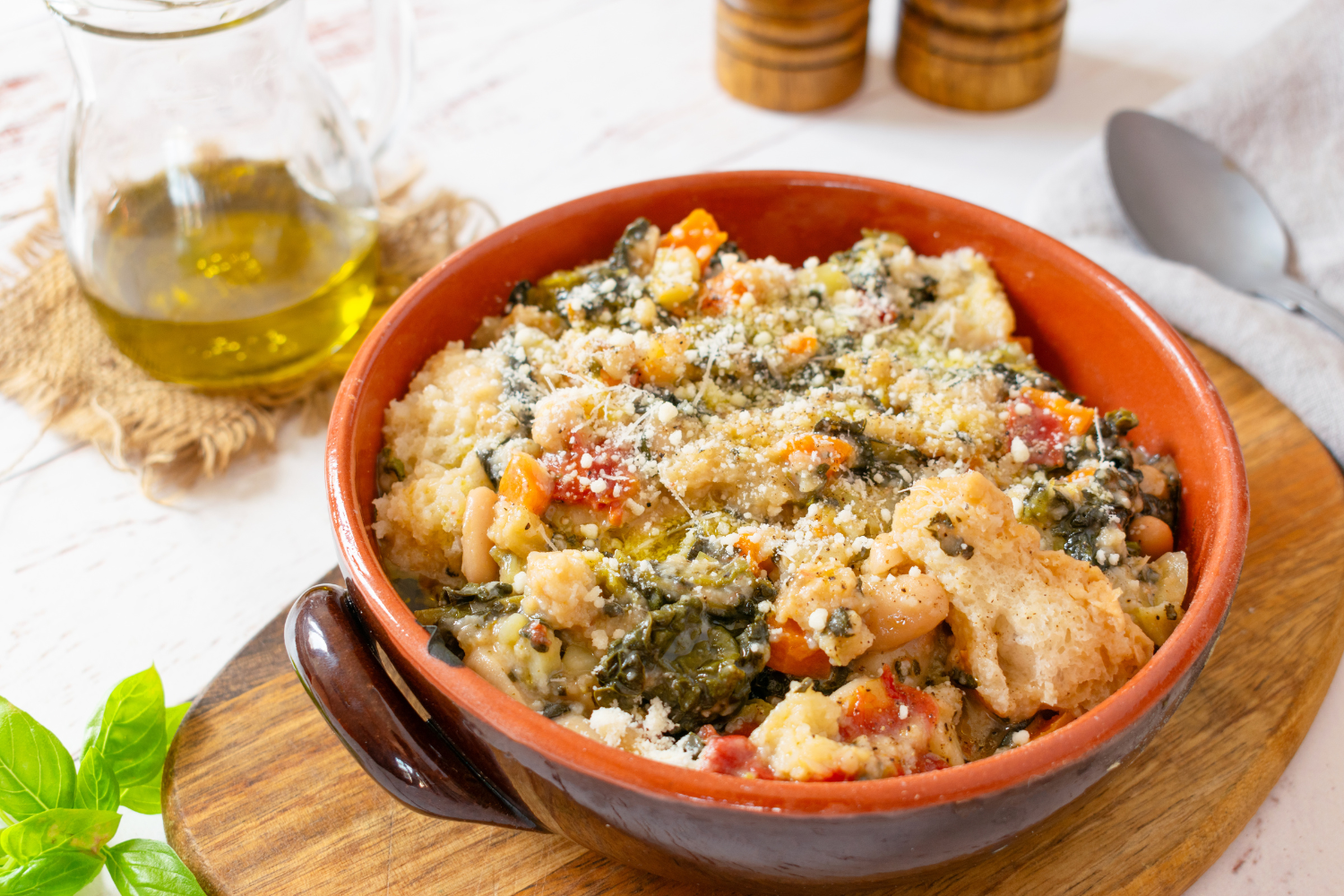
Why It’s Called Ribollita in Italian
The name Ribollita literally means “reboiled” in Italian. This refers to the traditional way this Italian soup was prepared. In rural Tuscany, families would cook a large pot of vegetable and bean soup early in the week. As the days went by, they would add stale bread to stretch the meal and reheat (or reboil) it for lunch or dinner.
This process not only deepened the flavors but transformed the texture, creating a thick, stew-like consistency, a hallmark of authentic Ribollita. The soup’s evolution from one day to the next was intentional: Italians understood that some dishes, like this one, taste even better after resting and reheating.
Today, this age-old technique remains central to Tuscan cooking, showcasing both the frugality and wisdom of Italian home cooks. Ribollita is still considered one of the region’s most iconic comfort foods, found everywhere from farmhouse tables to upscale trattorias.
How to Make an Italian Soup
The magic of this Italian soup lies in its layers of flavor, each developed slowly through simple steps. It begins with what Italians call a soffritto, a sauté of onion, celery, and carrot in extra virgin olive oil. This base is the foundation of countless Italian dishes and sets the stage for the hearty vegetables and beans that follow.
Once the soffritto is fragrant and golden, garlic joins the pot, releasing its aroma. Then come the greens, Savoy cabbage and Tuscan kale, which soften and release their earthy sweetness. Zucchini adds mild freshness, while cannellini beans bring creaminess and protein.
The addition of crushed tomatoes and vegetable broth ties everything together, and herbs like thyme and bay leaf infuse the soup with depth. A touch of red pepper flakes lends optional warmth, while stale bread is stirred in near the end to thicken and enrich the texture.
The result is a deeply satisfying bowl that tastes like it’s been simmering for hours, even though it takes under an hour to prepare.
Health Benefits of Italian Soup
This Italian soup isn’t just comforting, it’s packed with nutritional benefits that align beautifully with the Mediterranean diet. Each ingredient contributes to both flavor and wellness.
Kale and Savoy Cabbage: Loaded with vitamins A, C, and K, along with fiber and antioxidants. They support immune health, heart health, and digestion.
Cannellini Beans: A great source of plant-based protein and complex carbohydrates that help sustain energy and regulate blood sugar.
Olive Oil: Rich in monounsaturated fats and antioxidants, olive oil supports cardiovascular health and reduces inflammation.
Vegetables (Carrots, Celery, Onion, Zucchini): Provide phytonutrients and fiber, supporting gut health and lowering cholesterol.
Tomatoes: Contain lycopene, a powerful antioxidant linked to reduced risk of certain cancers and improved heart health.
Whole Grain Bread: Adds slow-digesting carbohydrates, helping to maintain stable energy levels.
This is a meal that truly nourishes the body while satisfying the soul, a perfect example of how the Mediterranean diet combines pleasure and health in every bite.
Italian Soup When Sick
A bowl of Italian Soup is particularly comforting when you’re feeling under the weather. Its warm broth, nutrient-dense vegetables, and gentle flavors make it easy to digest and soothing for both body and spirit.
Unlike cream-based soups, this Tuscan-style recipe provides hydration, fiber, and antioxidants without heaviness. The garlic, kale, and olive oil also contain natural anti-inflammatory and immune-boosting properties.
If you’re sick with a cold or flu, you can modify the recipe slightly, add more broth to make it thinner, include extra garlic and a bit of lemon juice, and skip the cheese for a lighter version. It’s the Italian equivalent of “chicken soup for the soul,” and many Italians swear by it during the colder months.
Storage and Leftovers
One of the best things about Italian Soup (or Ribollita) is that it tastes even better the next day. The flavors deepen, the bread soaks up more broth, and the soup becomes richer and thicker — just as the original Tuscan cooks intended.
Refrigerator: Store leftovers in an airtight container for up to 4 days.
Freezer: You can freeze the soup (without the bread) for up to 3 months. When reheating, add fresh bread to recreate the authentic ribollita texture.
Reheating: Reheat gently on the stovetop, adding a splash of water or broth to loosen the texture if needed. Drizzle with a bit of olive oil before serving to revive the flavor.
Pro tip: Always remove any leftover Parmesan rind or herb stems before storing, as they can impart bitterness over time.
Helpful Tips and Tricks
Use stale bread, not fresh. The slightly dry texture absorbs the broth better, giving the soup its characteristic body.
Don’t rush the cooking process. The secret to a good Italian Soup is slow simmering, which melds all the flavors beautifully.
Add Parmesan rind to the pot. It infuses the broth with a subtle savory richness (remove it before serving).
Customize your greens. If Tuscan kale isn’t available, use Swiss chard, escarole, or even spinach.
Make it spicy. Add a pinch of red pepper flakes or drizzle with chili oil for an extra kick.
Double the batch. This soup freezes well and is perfect for meal prep during busy weeks.
Balance the flavors. A small splash of vinegar or a squeeze of lemon juice at the end can brighten the dish and balance its richness.
Vegan and Vegetarian Options
This Italian soup is naturally vegetarian and can easily be made vegan. Simply omit the cheese or use a plant-based alternative for garnish.
To make it extra rich without animal products, drizzle a bit more extra virgin olive oil on top before serving. You can also blend a portion of the soup for a creamier texture without adding dairy.
If you’d like a heartier vegan variation, try adding:
1 cup cooked lentils or chickpeas for extra protein.
Roasted mushrooms for a deeper umami flavor.
A sprinkle of nutritional yeast for a cheesy finish.
This adaptability makes the soup a great choice for plant-based eaters or anyone seeking a wholesome, meat-free meal.
FAQs About Italian Soup
What is the difference between Ribollita and Minestrone?
Minestrone is a brothy Italian vegetable soup often containing pasta or rice. Ribollita (this Italian soup) is thicker and made with bread instead of pasta, giving it a stew-like consistency.
Can I use canned beans instead of dried?
Yes! Canned cannellini beans save time and work perfectly. Just be sure to drain and rinse them before adding to the pot.
What type of bread works best?
Use dense, rustic bread like Italian country loaf or sourdough. Avoid soft sandwich bread, which becomes mushy.
Can I make this in advance?
Absolutely. Like many Italian stews, the flavor improves overnight. Store it in the fridge and reheat gently before serving.
Can I add meat?
While traditionally vegetarian, you can include pancetta, sausage, or shredded chicken for added protein. However, the vegetarian version is both authentic and deeply satisfying.
What to Serve with Italian Soup
This Italian soup is a complete meal on its own, but it also pairs beautifully with other Mediterranean favorites.
Crusty Bread: Even though bread is already in the soup, a warm, rustic loaf is perfect for soaking up every last drop of broth. Try sourdough, ciabatta, or Tuscan pane.
Simple Salad: A crisp green salad with olive oil and lemon dressing provides a refreshing contrast to the hearty soup.
Roasted Vegetables: Try roasted eggplant, peppers, or cauliflower with olive oil and herbs.
Cheese Plate: Serve with wedges of pecorino Toscano, Parmigiano-Reggiano, or aged asiago for an authentic Italian touch.
A Glass of Wine: For the full Tuscan experience, pair your Italian Soup with a glass of Chianti or Montepulciano red wine.
This dish is also wonderful as a light main course for lunch or a cozy dinner with family.
Why Italian Soup Captures the Heart of the Mediterranean Diet
At its core, this Italian soup is a celebration of the Mediterranean way of eating, seasonal vegetables, olive oil, whole grains, and plant-based proteins. It’s affordable, deeply flavorful, and rooted in a philosophy that values health and pleasure equally.
From its humble beginnings in Tuscan villages to its place in modern kitchens around the world, Ribollita has stood the test of time because it proves that simple food, prepared with care, can be extraordinary.
Whether you’re enjoying it on a chilly evening, sharing it with loved ones, or reheating it for lunch the next day, this dish is comfort in its purest form, rustic, nourishing, and unmistakably Italian.
Traditional Italian Bean Soup (Ribollita)
Ingredients
- ½ cup Extra virgin olive oil
- 1 large Onion, chopped
- 2 Carrots, diced
- 2 Celery stalks, diced
- 3 cloves Garlic, minced
- ½ head Savoy cabbage, shredded
- 1 bunch Black kale (Tuscan cavolo nero or similar), stemmed and chopped
- 1 Zucchini, diced
- 2 cups Cooked cannellini beans (or 1 can, drained and rinsed)
- 6 cups Vegetable broth
- 1 cup Crushed tomatoes
- 1 Bay leaf
- 1 sprig Thyme
- ½ tsp Red pepper flakes (optional)
- Salt and pepper to taste
- 4 cups Stale bread, torn into pieces
- Freshly grated Parmesan cheese or pecorino Toscano, for serving
Instructions
- Cook the base vegetables. In a large pot, heat the olive oil over medium heat. Add the onion, carrots, and celery, and cook until softened, stirring occasionally, about 10 minutes.
- Add the Garlic and Greens. Add the minced garlic and cook for another minute until fragrant. Stir in the shredded cabbage, chopped kale, and zucchini. Cook for about 5 minutes, stirring occasionally, until the greens wilt.
- Combine the Ingredients. Add the cannellini beans, vegetable broth, crushed tomatoes, bay leaf, thyme, and red pepper flakes (if using). Stir well to combine all the ingredients. Bring the mixture to a boil, then reduce the heat and let it simmer for 30 minutes.
- Season and add bread. Season the soup with salt and pepper to taste. Add the torn stale bread pieces, stirring well. Simmer the soup for another 10 minutes, stirring occasionally. The bread will absorb the liquid and thicken the soup into a hearty consistency.
- Finish and serve. Remove the bay leaf and thyme sprig before serving. Ladle the soup into bowls, drizzle with extra virgin olive oil, and top with freshly grated Parmesan cheese or pecorino Toscano. Enjoy the rustic and comforting flavors of Tuscan Italian Bean Soup!
Nutrition
About the Author: Mediterranean Living



Yum