
If you’re searching for a pasta dish that captures the bright, sun-soaked flavors of Italy’s Amalfi Coast, Linguine Positano is the perfect recipe to add to your collection. Made with sweet cherry tomatoes, fragrant garlic, fresh basil, and extra virgin olive oil, this simple pasta celebrates the beauty of fresh, high-quality ingredients. With minimal preparation and just a handful of pantry staples, Linguine Positano proves that some of the most memorable meals are often the simplest.
Named after the picturesque seaside town of Positano, this recipe embodies the relaxed elegance of Mediterranean cooking. Rather than relying on heavy cream or complicated sauces, Linguine Positano lets ripe tomatoes create a naturally rich sauce that clings beautifully to every strand of pasta. Fresh basil and olive oil complete the dish, creating a meal that’s light, vibrant, and deeply satisfying.
This recipe also aligns beautifully with the Mediterranean diet, which encourages enjoying whole foods, healthy fats, vegetables, herbs, and moderate portions of pasta. When paired with a fresh salad or grilled seafood, Linguine Positano becomes a balanced meal that’s as nourishing as it is delicious. Whether you’re preparing a quick weeknight dinner or serving guests, this classic Mediterranean-inspired pasta delivers restaurant-quality flavor with very little effort.
How to Make Linguine Positano
The beauty of Linguine Positano lies in its simplicity. Every ingredient has an important role, so using fresh, high-quality produce makes all the difference.
Begin by bringing a large pot of generously salted water to a boil. Cook the linguine until al dente according to the package directions. Before draining, reserve about half a cup of the pasta cooking water. This starchy liquid helps create a silky sauce that coats the pasta perfectly.
While the pasta cooks, heat extra virgin olive oil in a large skillet over medium heat. Add the thinly sliced garlic and cook gently until it’s fragrant and lightly golden. Be careful not to let the garlic brown too much, as burnt garlic can introduce bitterness to the dish.
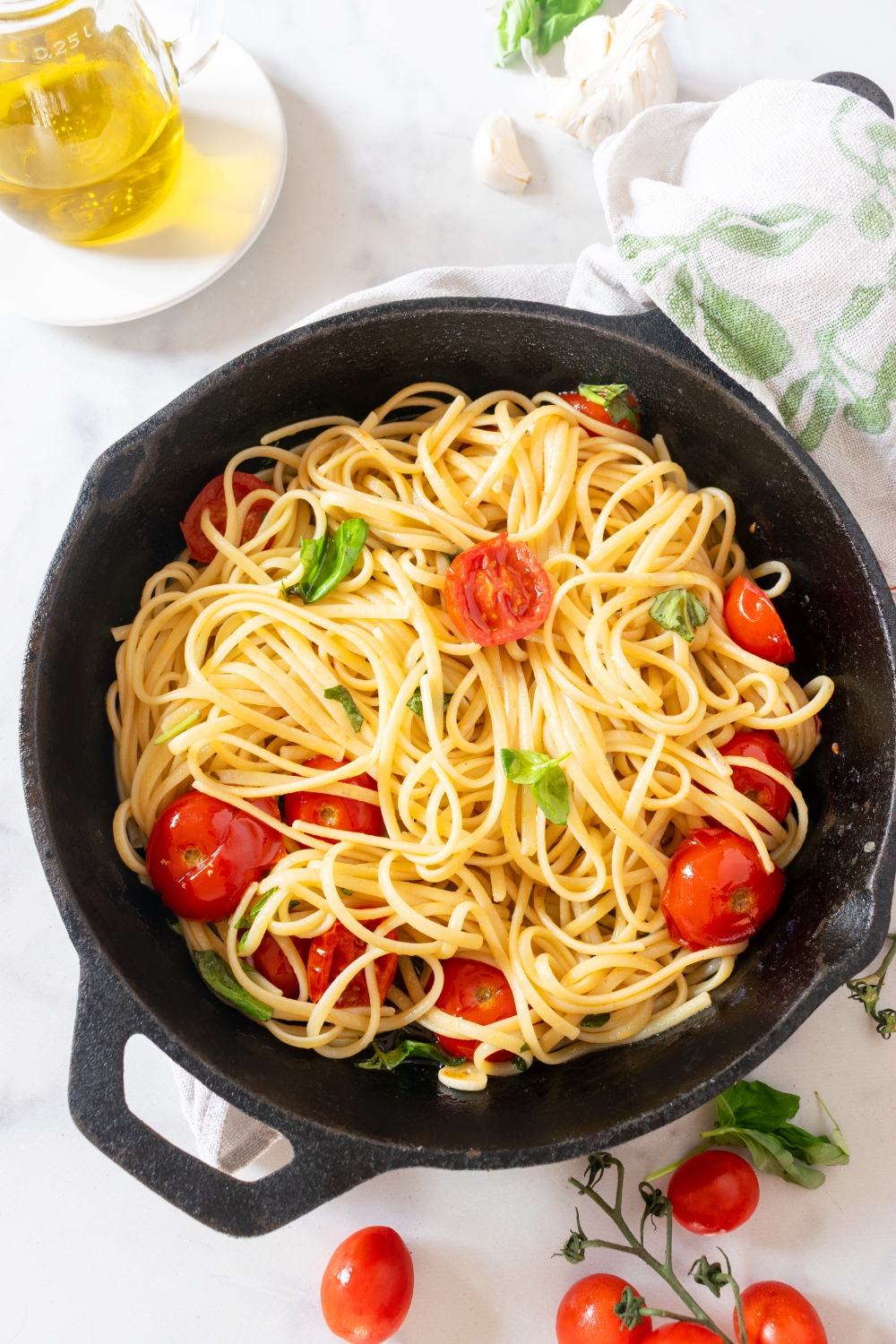
Next, add the halved cherry tomatoes along with the red pepper flakes if you’re using them. Season with salt and freshly ground black pepper. As the tomatoes cook, they’ll soften, burst, and release their juices, naturally creating the flavorful sauce that defines Linguine Positano.
Once the tomatoes have broken down, add the cooked linguine directly to the skillet. Toss everything together, adding a splash of the reserved pasta water if needed to loosen the sauce. The starch in the pasta water helps bind the olive oil and tomato juices into a smooth, glossy coating.
Finally, remove the skillet from the heat and stir in the torn basil leaves. The residual warmth gently wilts the basil while preserving its fresh aroma. Finish with freshly grated Parmesan cheese if desired, and serve immediately.
The result is a bowl of Linguine Positano that’s fresh, comforting, and bursting with Mediterranean flavor.
Helpful Tips and Tricks
Because Linguine Positano contains so few ingredients, paying attention to the details will elevate the finished dish.
Choose ripe cherry tomatoes whenever possible. Their natural sweetness balances the garlic and olive oil while producing a richer sauce. During peak summer months, local tomatoes make an especially noticeable difference.
Use high-quality extra virgin olive oil. Since it’s one of the primary flavors in Linguine Positano, a good olive oil contributes richness and fruity complexity that can’t be replicated with lower-quality oils.
Cook the garlic slowly over moderate heat. Garlic should become fragrant and lightly golden rather than dark brown. Gentle cooking preserves its sweet, mellow flavor.
Don’t overcook the pasta. Al dente linguine continues cooking slightly when tossed with the hot tomato sauce, resulting in the perfect texture.
Always reserve pasta water before draining. This simple step helps create the silky consistency that makes Linguine Positano feel like it came from an Italian restaurant.
For extra freshness, garnish with additional basil leaves just before serving. A small squeeze of fresh lemon juice can also brighten the flavors if desired.
What to Serve with Linguine Positano
Linguine Positano is satisfying on its own, but it also pairs beautifully with many Mediterranean-inspired side dishes.
A crisp green salad with arugula, mixed greens, cucumbers, and a light lemon vinaigrette complements the richness of the olive oil while adding freshness to the meal.
Warm crusty whole grain bread is perfect for soaking up every bit of the flavorful tomato sauce. For an authentic Italian touch, lightly grill the bread and rub it with a cut garlic clove before serving.
Grilled vegetables such as zucchini, eggplant, asparagus, or bell peppers make excellent side dishes. Their smoky flavors pair naturally with the sweet tomatoes and basil.
If you’d like to add protein, grilled shrimp, roasted salmon, grilled chicken, or seared scallops all complement Linguine Positano without overpowering its delicate flavors.
For entertaining, begin the meal with a Mediterranean antipasto platter featuring olives, marinated vegetables, roasted peppers, artichokes, and fresh cheeses before serving the pasta as the main course.
Storage and Leftovers
Linguine Positano stores well, making it a great option for meal prep or enjoying leftovers.
Allow the pasta to cool before transferring it to an airtight container. Refrigerate for up to three days.
When reheating, warm the pasta gently in a skillet over medium-low heat with a splash of water or extra virgin olive oil. This helps restore the silky consistency of the sauce while preventing the pasta from drying out.
Microwaving also works, although reheating on the stovetop generally provides the best texture.
Leftover Linguine Positano can even be enjoyed cold as a pasta salad. Toss it with fresh arugula, mozzarella pearls, olives, or additional cherry tomatoes for an entirely new meal.
Because this recipe doesn’t rely on cream, it reheats much better than many heavier pasta dishes.
Health Benefits
Linguine Positano showcases many of the nutritious ingredients that define the Mediterranean diet.
Extra virgin olive oil provides heart-healthy monounsaturated fats and antioxidants that support cardiovascular health. It also helps your body absorb the fat-soluble vitamins found in tomatoes and basil.
Cherry tomatoes are rich in vitamin C, potassium, and lycopene, a powerful antioxidant associated with numerous health benefits. Cooking tomatoes actually increases the availability of lycopene, making this dish both delicious and nutritious.
Fresh basil contributes antioxidants, vitamin K, and aromatic compounds that enhance both flavor and wellness.
Although pasta often gets an undeserved reputation, enjoying moderate portions alongside vegetables and healthy fats fits comfortably within the Mediterranean diet. Pairing the pasta with vegetables and fresh herbs creates a balanced meal that provides steady energy and satisfying flavor.
By focusing on whole ingredients rather than processed sauces, Linguine Positano offers a lighter approach to pasta that’s both nourishing and deeply satisfying.
FAQs
Can I use another type of pasta?
Yes. Spaghetti, fettuccine, bucatini, or even penne all work well if you don’t have linguine.
Can I make Linguine Positano gluten-free?
Absolutely. Simply substitute your favorite gluten-free pasta while following the same cooking instructions.
Can I add protein?
Yes. Grilled shrimp, chicken, salmon, or scallops pair beautifully with Linguine Positano while maintaining its Mediterranean character.
Can I make this recipe ahead of time?
While it’s best served fresh, you can prepare the tomato sauce several hours ahead and cook the pasta just before serving.
Can I use canned tomatoes instead of cherry tomatoes?
Fresh cherry tomatoes provide the signature flavor and texture of Linguine Positano, but high-quality canned diced tomatoes can be substituted when fresh tomatoes aren’t in season.
Linguine Positano is a wonderful example of how simple, fresh ingredients can create extraordinary flavor. Sweet cherry tomatoes, fragrant garlic, fresh basil, and extra virgin olive oil come together to produce a light yet satisfying pasta that’s both elegant and easy to prepare. Rooted in the principles of the Mediterranean diet, Linguine Positano celebrates seasonal produce, wholesome ingredients, and uncomplicated cooking techniques. Whether you’re serving it for a quick weeknight dinner or a leisurely meal with family and friends, this classic Italian-inspired pasta is sure to become a favorite that you’ll return to throughout the year.

Linguine Positano
Ingredients
- 12 ounces linguine
- 4 tablespoons extra virgin olive oil
- 3 cloves garlic, thinly sliced
- 4 cups cherry tomatoes, halved
- 1/2 teaspoon red pepper flakes
- salt, to taste
- freshly ground black pepper, to taste
- 1/4 cup fresh basil leaves, torn
- freshly grated parmesan cheese, for serving (optional)
Instructions
- Cook the pasta: Bring a large pot of salted water to a boil. Add linguine and cook until al dente, according to package instructions. Reserve ½ cup of pasta water, then drain.
- Sauté the garlic: In a large skillet, heat olive oil over medium heat. Add garlic and cook for about 2 minutes, until golden and fragrant, don’t let it burn.
- Cook the tomatoes: Add cherry tomatoes and red pepper flakes (if using). Season with salt and pepper. Cook for 5–7 minutes, stirring occasionally, until tomatoes break down and release their juices.
- Combine pasta and sauce: Add drained linguine to the skillet. Toss to combine, adding a splash of pasta water if the sauce seems dry.
- Finish with basil: Remove from heat and stir in torn basil leaves. Taste and adjust seasoning.
- Serve: Divide among plates and top with freshly grated Parmesan, if using. Serve immediately.
Nutrition
About the Author: Jess Haines-Stephan



It was my first time cooking Italian food and it is easy and inexpensive but most of all
It is delicious.
I’m glad you enjoyed it!