A classic Spanakopita recipe is one of the most beloved dishes in Greek cuisine, and for good reason. With its crisp, golden layers of phyllo dough and savory spinach-feta filling, spanakopita manages to be both comforting and fresh at the same time. It’s the kind of dish that feels equally at home on a festive holiday table, a casual family dinner spread, or served alongside a simple salad for lunch.
Spanakopita is a shining example of Mediterranean cooking at its best: simple ingredients, thoughtful preparation, and a balance of flavors and textures that never feels heavy. The flaky crunch of phyllo contrasts beautifully with the tender spinach filling, while herbs, olive oil, and feta bring brightness and depth. Though it looks impressive when sliced, this Spanakopita recipe is approachable for home cooks who take their time and enjoy the process.
Whether you’ve eaten spanakopita in a Greek bakery, at a family gathering, or while traveling through Greece, recreating it at home is deeply rewarding. This recipe stays true to tradition while offering clear steps and practical tips to help you achieve a crisp, flavorful pie every time.
What Is Spanakopita?
Spanakopita is a traditional Greek savory pie made with layers of phyllo dough filled with spinach, feta cheese, herbs, and eggs. The name comes from two Greek words: spanaki (spinach) and pita (pie). While variations exist across regions and households, the core elements remain the same — greens, cheese, olive oil, and phyllo.
In Greece, spanakopita is eaten in many forms. It may be baked in large pans and cut into squares, rolled into individual triangles, or shaped into rustic round pies. It’s commonly enjoyed as a main dish, a side, or even a breakfast or snack.
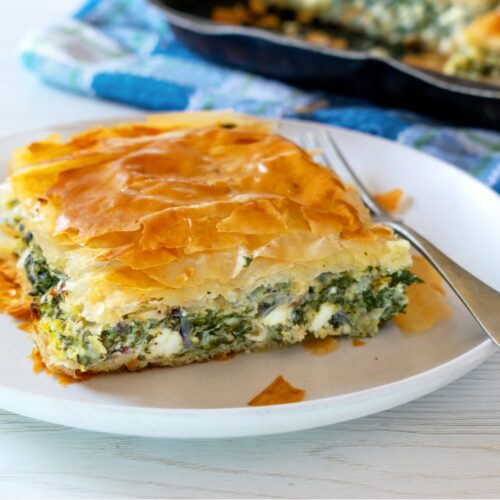
This Spanakopita recipe reflects a classic oven-baked version made in a 9×13-inch pan, ideal for sharing. The filling is herbaceous and savory without being overly salty, and the phyllo bakes up crisp and golden, offering that signature crackle when sliced.
Is This Spanakopita Recipe Healthy?
Spanakopita can absolutely be part of a healthy Mediterranean way of eating when enjoyed in appropriate portions and made with quality ingredients.
At its core, spanakopita is vegetable-forward. Spinach makes up the bulk of the filling, providing fiber, vitamins, and antioxidants. Olive oil is the primary fat, supplying heart-healthy monounsaturated fats rather than refined oils. Eggs and feta add protein and calcium, making the dish more satisfying and nutritionally complete.
While phyllo dough is a refined grain, it is used sparingly and brushed lightly with fat rather than layered with heavy fillings or rich sauces. Compared to many pastry-based dishes, spanakopita remains relatively balanced and nutrient-dense.
This Spanakopita recipe reflects traditional Mediterranean proportions, vegetables as the foundation, cheese used thoughtfully, and healthy fats enhancing flavor rather than overwhelming the dish.
How to Make This Spanakopita Recipe
Making spanakopita is more about patience and layering than technical difficulty. Once you understand the rhythm of working with phyllo dough, the process becomes meditative and surprisingly enjoyable.
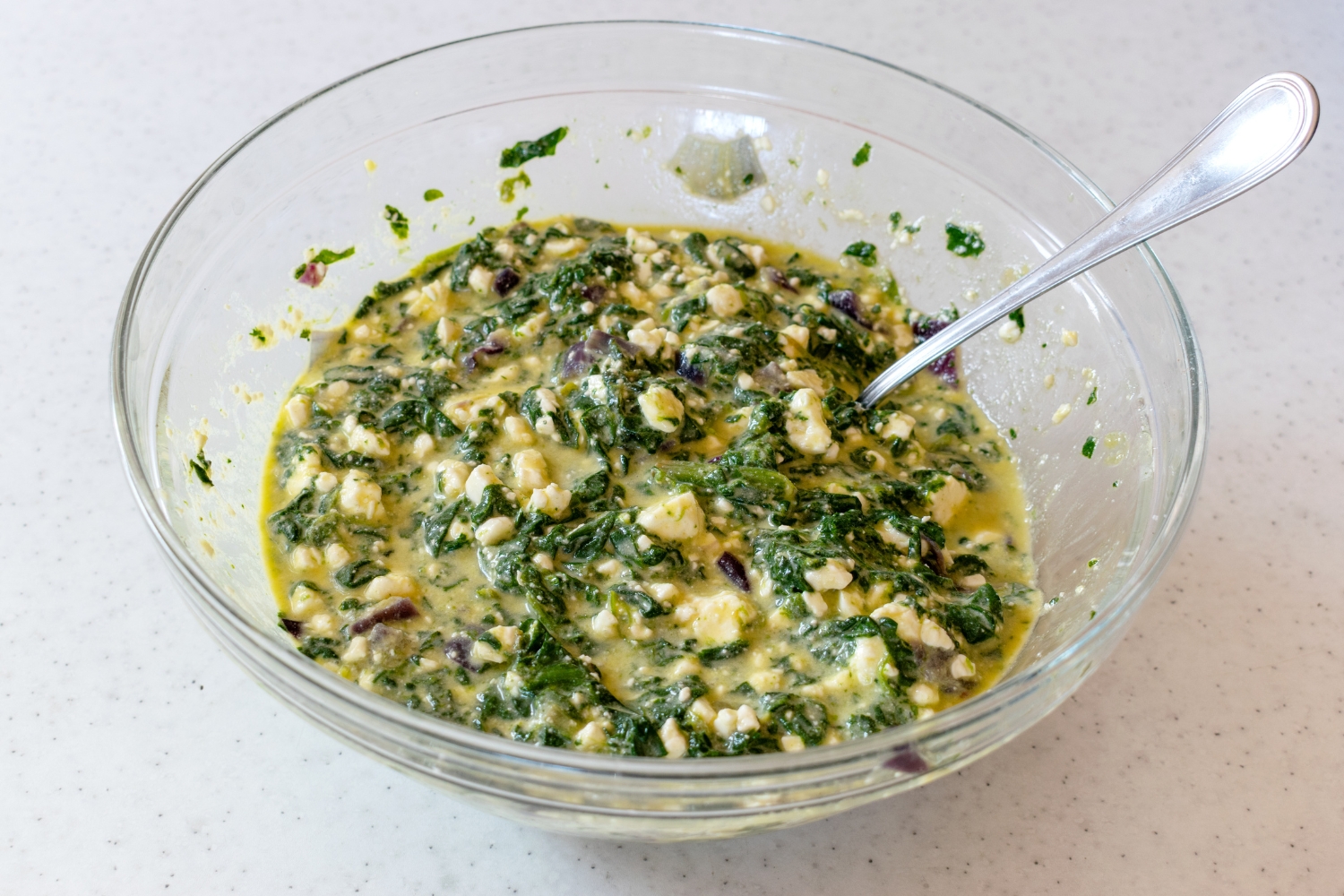
The filling starts with gently sautéed red onion and scallions in olive oil. This quick step softens their flavor and removes harshness while adding depth. Spinach, once thawed and thoroughly drained, is combined with beaten eggs, fresh dill, feta cheese, and seasoning. The key here is moisture control — squeezing the spinach well ensures a filling that is rich but not watery.
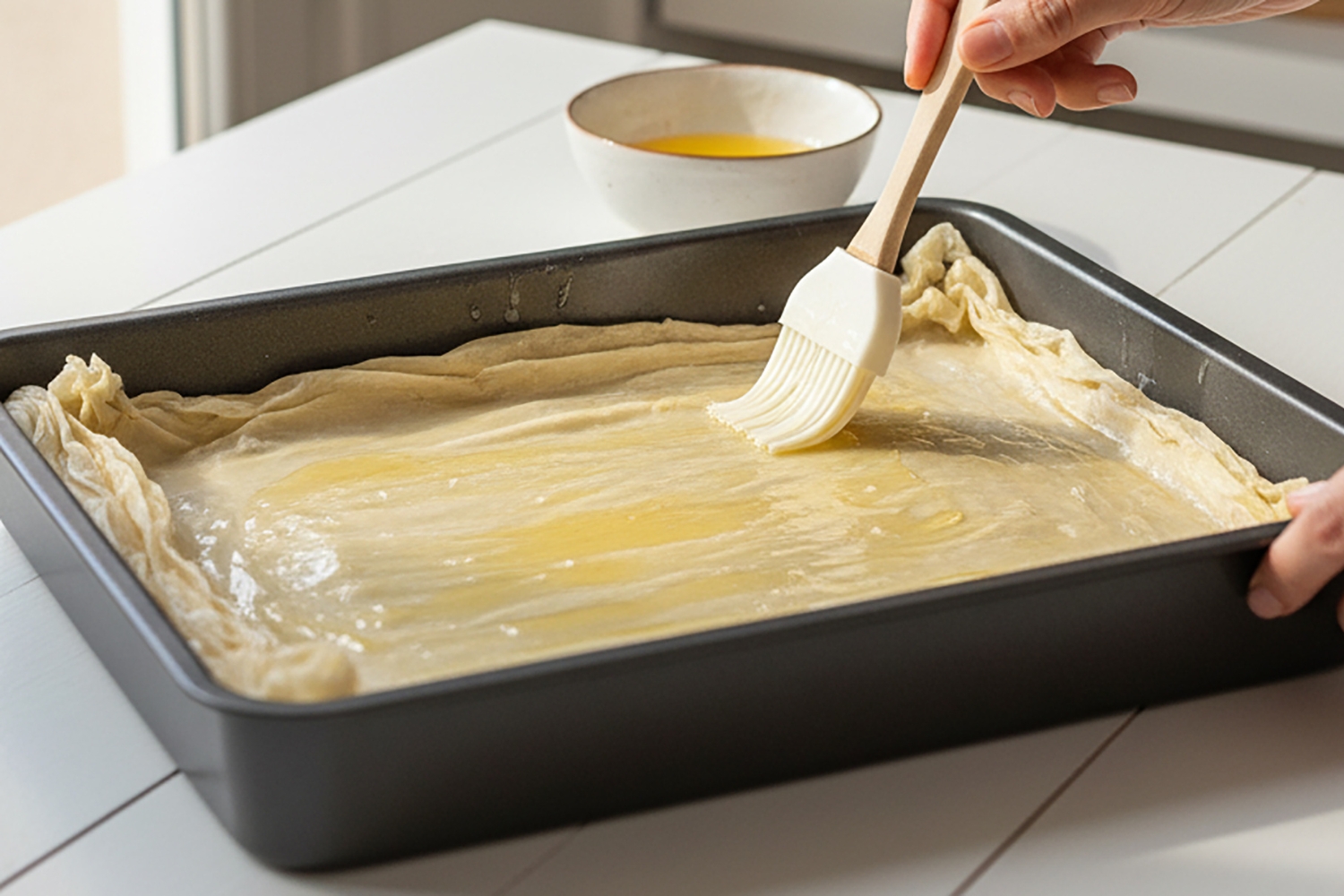
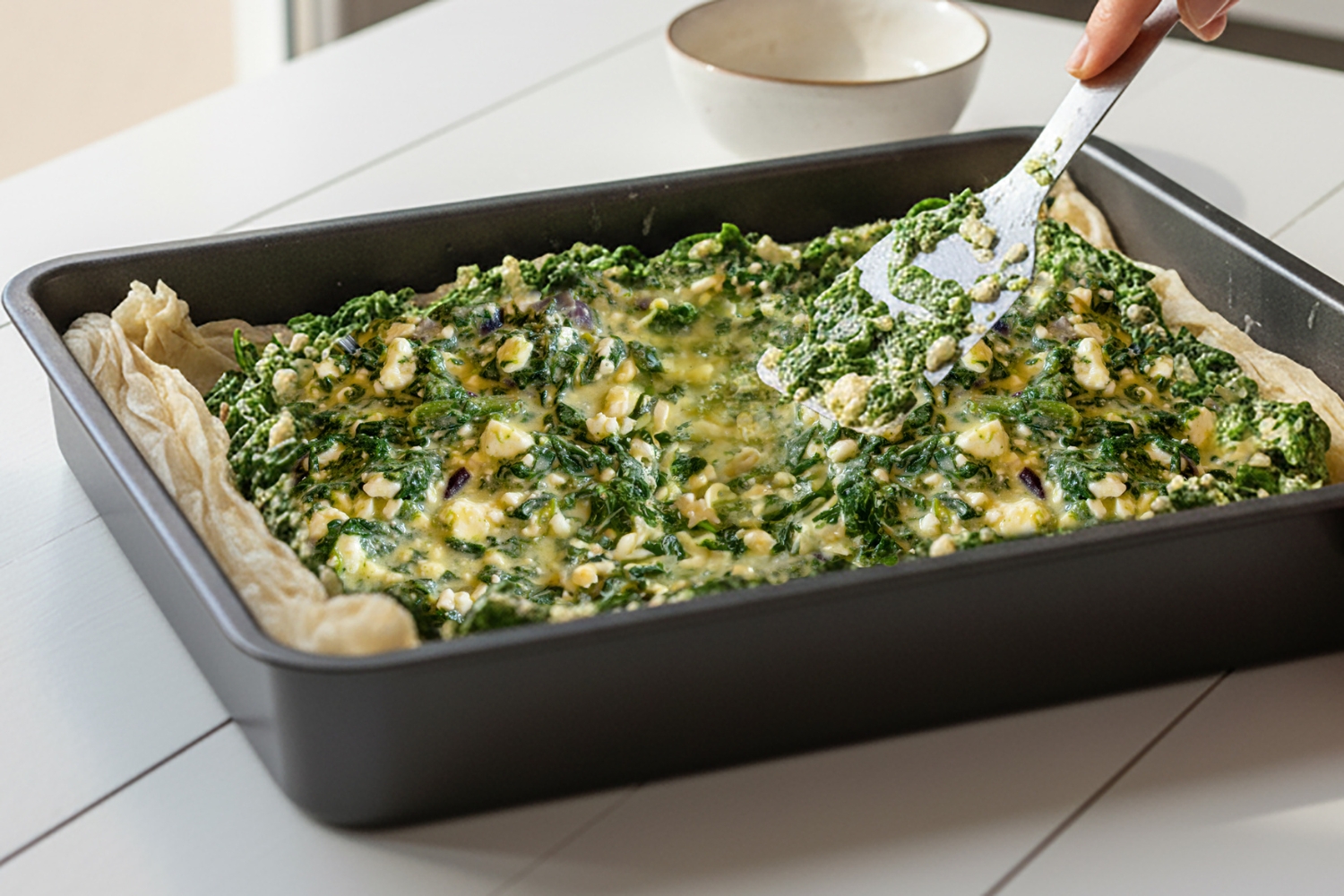
Phyllo dough is layered sheet by sheet, each brushed lightly with an olive oil–butter mixture. This creates distinct, flaky layers once baked. Half of the phyllo forms the base, followed by the spinach filling, then topped with more phyllo sheets. Folding and sealing the edges helps keep the filling contained and encourages even browning.
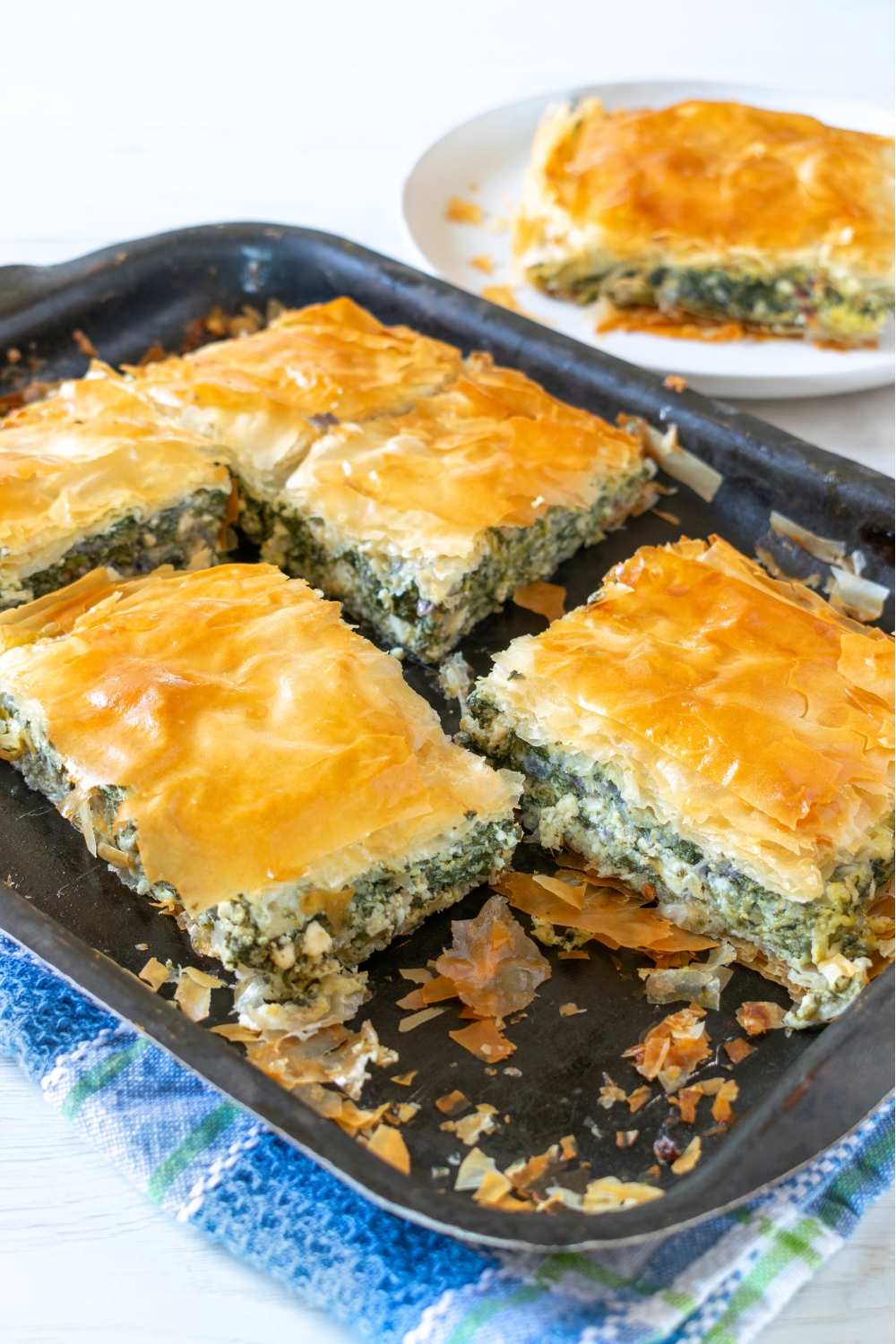
When baked, the pie transforms. The phyllo turns golden and crisp, the filling sets into a tender, savory layer, and the aromas of spinach, dill, and olive oil fill the kitchen. Allowing the pie to cool slightly before slicing helps it hold its shape while still remaining warm and inviting.
What to Serve With Spanakopita
Spanakopita is wonderfully versatile and pairs well with simple Mediterranean sides.
A crisp Greek salad with tomatoes, cucumber, olives, and a lemon-olive oil dressing is a natural companion. The freshness of the salad balances the richness of the pie.
Roasted vegetables such as zucchini, peppers, or eggplant also work beautifully, especially if you’re serving spanakopita as part of a larger meal. For something lighter, a simple arugula or mixed-greens salad with lemon vinaigrette is perfect.
Spanakopita also pairs well with a dollop of Greek yogurt or a light yogurt-based sauce, which adds creaminess and contrast. Olives, pickled vegetables, or a small mezze spread can turn this Spanakopita recipe into a complete Mediterranean feast.
Health Benefits of Spanakopita
Rich in Greens: Spinach is loaded with vitamins A, C, and K, along with iron and antioxidants that support immune health, bone health, and cellular protection.
Heart-Healthy Fats: Extra virgin olive oil contributes monounsaturated fats and polyphenols known to support cardiovascular wellness and reduce inflammation.
Protein and Calcium Boost: Eggs and feta provide high-quality protein and calcium, supporting muscle function and bone strength while helping make the dish more satisfying.
Mediterranean Balance: This Spanakopita recipe combines vegetables, herbs, healthy fats, and moderate amounts of cheese in harmony, a hallmark of traditional Mediterranean eating patterns.
Satisfying and Wholesome: Spanakopita can serve as a complete meal on its own or be paired with a fresh salad for a balanced, nourishing plate.
FAQs
Can I use fresh spinach instead of frozen?
Yes. Use about 2 pounds of fresh spinach. Sauté it lightly until wilted, then drain and squeeze out as much liquid as possible before adding it to the filling.
Can I make spanakopita ahead of time?
Absolutely. You can assemble this Spanakopita recipe up to a day in advance, cover it tightly, and refrigerate until ready to bake. It also reheats very well.
Can I freeze spanakopita?
Yes. Bake the spanakopita first, allow it to cool completely, then wrap tightly and freeze for up to three months. Reheat in a 350°F oven until warmed through.
What’s the best way to serve spanakopita?
Serve it warm or at room temperature. It pairs well with salads, olives, roasted vegetables, or a side of yogurt sauce.
Can I make it lighter?
You can reduce the butter and rely more heavily on olive oil for brushing the phyllo.
Spanakopita
Ingredients
For the Filling:
- 1/4 cup extra virgin olive oil
- 1 red onion chopped
- 1 bunch scallions chopped
- Sprinkle of salt
- 4 eggs
- 2 pounds frozen spinach thawed and drained
- 1 large bunch fresh dill de-stemmed and chopped
- 12 ounces feta cheese crumbled
- 1/4 teaspoon salt
For Assembly:
- 1/2 cup extra virgin olive oil
- 2 tablespoons butter
- 1 pound frozen phyllo dough thawed
Instructions
- Thaw the phyllo and spinach: Remove both from the freezer at least 30 minutes before beginning.
- Sauté the onions: Heat ¼ cup olive oil in a skillet over medium heat. Add red onion and scallions with a sprinkle of salt. Sauté for 1–2 minutes, until fragrant and softened. Set aside.
- Preheat the oven: to 350°F.
- Prepare the spinach: Place spinach in a colander. If any pieces are still frozen, run warm water over them. Drain well, then squeeze out as much excess water as possible—this step is key to prevent sogginess.
- Make the filling: In a large bowl, beat the eggs. Add drained spinach, sautéed onions, dill, feta, and ¼ teaspoon salt. Mix well to combine.
- Prepare the phyllo layers: Melt the butter in a small pan and stir in ½ cup olive oil. Brush the bottom of a 9x13-inch baking dish with the olive oil-butter mixture.
- Layer the phyllo: Unroll the phyllo dough and carefully place one sheet in the dish. Brush with the olive oil-butter mixture. Repeat with about 12 sheets, brushing each with oil and butter.
- Add the filling: Spread the spinach mixture evenly over the phyllo layers.
- Top with remaining phyllo: Layer another 12 sheets on top, brushing each with the oil-butter mixture. Fold the edges over the sides and brush with more oil-butter to seal.
- Bake: Place in the oven and bake for 40 minutes, or until the phyllo is golden brown and crispy.
- Cool and serve: Let cool for about 15 minutes before slicing and serving.
Nutrition
About the Author: Bill Bradley, R.D.