I love spicy food. And when I say spicy, I don’t mean a little sprinkle of red pepper flakes. I mean the kind of spicy food that makes you sweat a little, wakes up every taste bud in your mouth, and somehow has you going back for another bite even though you know it is going to hurt. That’s one of the reasons I love skhug.
Skhug is a fiery green hot sauce made with fresh cilantro, hot peppers, garlic, and spices. It is incredibly simple, but the flavor is anything but simple. You get the freshness of the cilantro, the earthiness of cumin and coriander, the bite of fresh garlic, and then, of course, the heat from the peppers.
If you like hot sauce and you love Mediterranean Diet recipes, skhug is one of those condiments that can completely transform a meal. Spoon a little onto hummus, eggs, falafel, roasted vegetables, beans, chicken, fish, or a warm piece of pita bread and suddenly the whole meal comes alive.
And when I say “a little,” I mean it. Depending on the peppers you use, skhug can be seriously hot.
What Is Skhug?
Skhug,also spelled zhug, zhoug, or schug,is a hot pepper and herb sauce associated especially with Yemeni cuisine and now widely eaten in Israel and elsewhere in the Middle East.
The name is sometimes described as referring to the traditional mortar-and-pestle preparation. And that makes sense when you see how simple the sauce is. At its heart, skhug is fresh herbs, hot peppers, garlic, salt, and spices crushed or ground together into a vibrant sauce.
There isn’t just one version of skhug. You’ll find green versions made with fresh green peppers and cilantro, red versions made with red peppers, and recipes that vary considerably from family to family. Some are extremely hot. Others are more herbaceous. Some are smooth, while others have a much rougher, almost pesto-like texture.
That’s one of the things I love about traditional Mediterranean cooking. There often isn’t one “correct” recipe. The recipe changes depending on the country, region, village, family, and even the person making it.
This version comes from my friend Zohar Amara, owner of Yalla in Brattleboro, Vermont.

The Skhug at Yalla
If you’ve ever been to Yalla, you know that it’s not just about the food.
There are often lines out the door. The atmosphere is fun and relaxed. There is Star Trek paraphernalia scattered around, and every once in a while the employees will suddenly start singing along with whatever song happens to be playing over the speakers.
And then there’s the food.
The pita bread alone is worth the trip. It’s also a fantastic place for breakfast, and the skhug is the kind of condiment that makes you want to put it on just about everything.
Zohar learned these flavors through his family. His grandfather used a meat grinder to make skhug. I love that image because today we’re used to throwing everything into a food processor and having a sauce 30 seconds later. A generation or two ago, people simply used whatever tool they had.
You can still make skhug traditionally with a mortar and pestle. You can use a meat grinder. You can use a food processor. You could even make a small batch in something like a NutriBullet.
The equipment isn’t really the important part.
It’s the fresh ingredients.
What Does Skhug Taste Like?
The first thing you’ll probably notice is the heat, but good skhug isn’t just about being hot.
It should taste incredibly fresh.
Cilantro gives it a bright, grassy flavor. Garlic adds sharpness. Cumin and cardamom bring warmth and earthiness. The peppers add fruitiness as well as heat, and a pinch of salt pulls everything together.
The texture is also important. I don’t like skhug completely liquefied. I think it’s best somewhere between smooth and grassy. You want everything finely chopped and combined, but you should still be able to tell that you’re eating fresh cilantro and peppers.
Think of it almost as a very spicy herb sauce rather than a bottled American-style hot sauce.
That’s also why it’s so versatile.
A Brief History of Skhug
Skhug has its roots in Yemen, where hot peppers, herbs, garlic, and spices have long been combined into intensely flavorful condiments. Yemeni Jews brought skhug with them to Israel, where it became enormously popular.
Today you’ll see it served with all kinds of foods throughout Israel and increasingly at Mediterranean and Middle Eastern restaurants in the United States.
That journey is one of the things I find so fascinating about Mediterranean food.
The Mediterranean isn’t one cuisine. It’s a meeting place.
For thousands of years, ingredients, cooking techniques, spices, religions, cultures, and people have moved around the Mediterranean and surrounding regions. Foods that we now think of as essential to a particular cuisine often arrived from somewhere else.
Hot peppers are a perfect example.
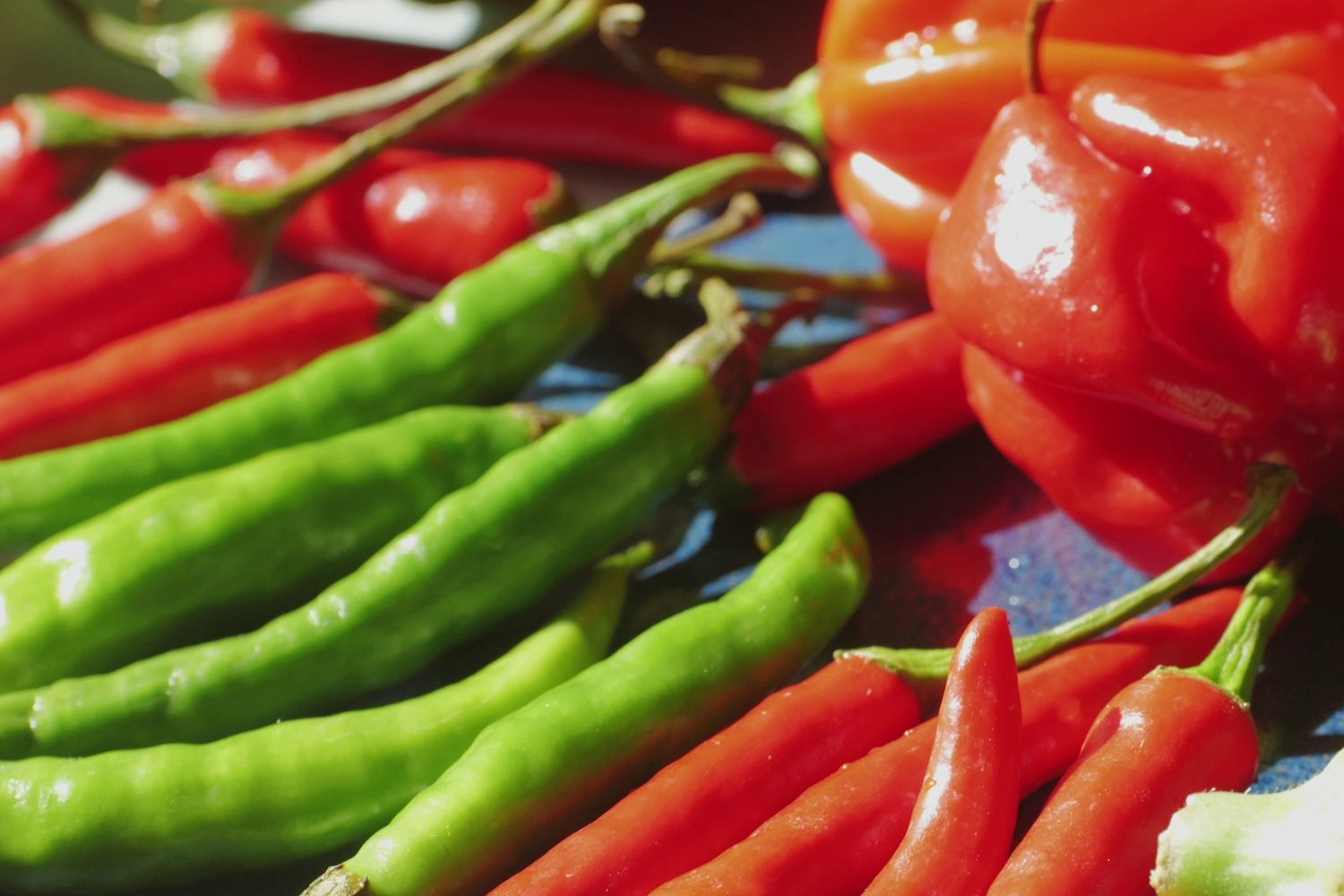
Hot Peppers and Mediterranean Cooking
It’s easy to assume that hot peppers have always been part of Mediterranean cooking, but peppers are native to the Americas. They didn’t arrive in Europe, Africa, or the Middle East until after Europeans reached the Americas.
Once they arrived, though, people throughout the Mediterranean embraced them.
Today you find hot pepper pastes, sauces, and seasonings from Spain and North Africa to Italy, Greece, Turkey, Israel, and other parts of the eastern Mediterranean.
Harissa is probably one of the best-known examples from North Africa. Calabria in southern Italy is famous for its hot peppers. Spain has its own relationship with peppers, including everything from smoked paprika to spicy sauces.
And people’s definitions of “hot” can be very different.
I learned that lesson firsthand in Spain.
“Is It Hot?”
Years ago, I walked into a taverna in Spain and ordered patatas bravas.
I asked the owner if they were hot.
He assured me they were mild.
Perfect.
Then I took a bite.
My mouth was on fire.
I looked over at him and he started laughing.
“Americano!”
I couldn’t help but laugh too.
And then I ordered more.
That’s the strange thing about really good spicy food. There’s a point where you’re not entirely sure whether you’re enjoying yourself anymore, but you keep eating anyway.
If you’ve ever watched the show Hot Ones, you know exactly what I’m talking about. There’s heat that’s pleasant, heat that makes you sweat, and then there’s heat that makes you start questioning your life choices.
Skhug can fall anywhere along that spectrum depending on which peppers you use.
How Hot Is Skhug?
That’s largely up to you.
Zohar’s recipe calls for one to two hot peppers. But “hot pepper” can mean very different things.
If you’re not accustomed to spicy foods, start with one pepper, or even part of one. You can always make the next batch hotter.
If you’re a serious chile-head, go for it.
Just remember that the cilantro, garlic, cumin, and cardamom are supposed to be part of the experience too. Personally, I want skhug hot enough to wake me up but not so hot that I can’t taste anything else.
The exact heat will also change from pepper to pepper. Even two peppers from the same plant can sometimes have surprisingly different levels of heat.
So taste as you go.
Carefully.
A Warning About Working With Hot Peppers
One quick warning before you start making skhug: respect the peppers.
The capsaicin that makes peppers hot can stay on your hands. Then you rub your eye an hour later and suddenly realize you’ve made a terrible mistake.
If you’re working with particularly hot peppers, wearing disposable gloves is a good idea. At the very least, wash your hands thoroughly with soap after handling them and avoid touching your eyes, nose, or face.
Also be careful when you open the food processor.
Processing hot peppers can release compounds into the air that may irritate your eyes, nose, or throat. Don’t stick your face directly over the food processor and take a giant breath.
I’ve done enough experimenting with hot peppers to tell you that this is one culinary lesson you don’t need to learn firsthand.
Different Ways to Make Skhug
Traditionally, you can make skhug with a mortar and pestle. This gives you a lot of control over the texture and creates a wonderfully rustic sauce.
Zohar remembers his grandfather using a meat grinder.
For most of us, though, the easiest method is a food processor.
You can also use a small blender or NutriBullet, although you may need to add a little water or extra-virgin olive oil to get everything moving. Just be careful not to blend it into a completely smooth green liquid.
You want texture.
There should be little flecks of cilantro and pepper throughout the sauce.
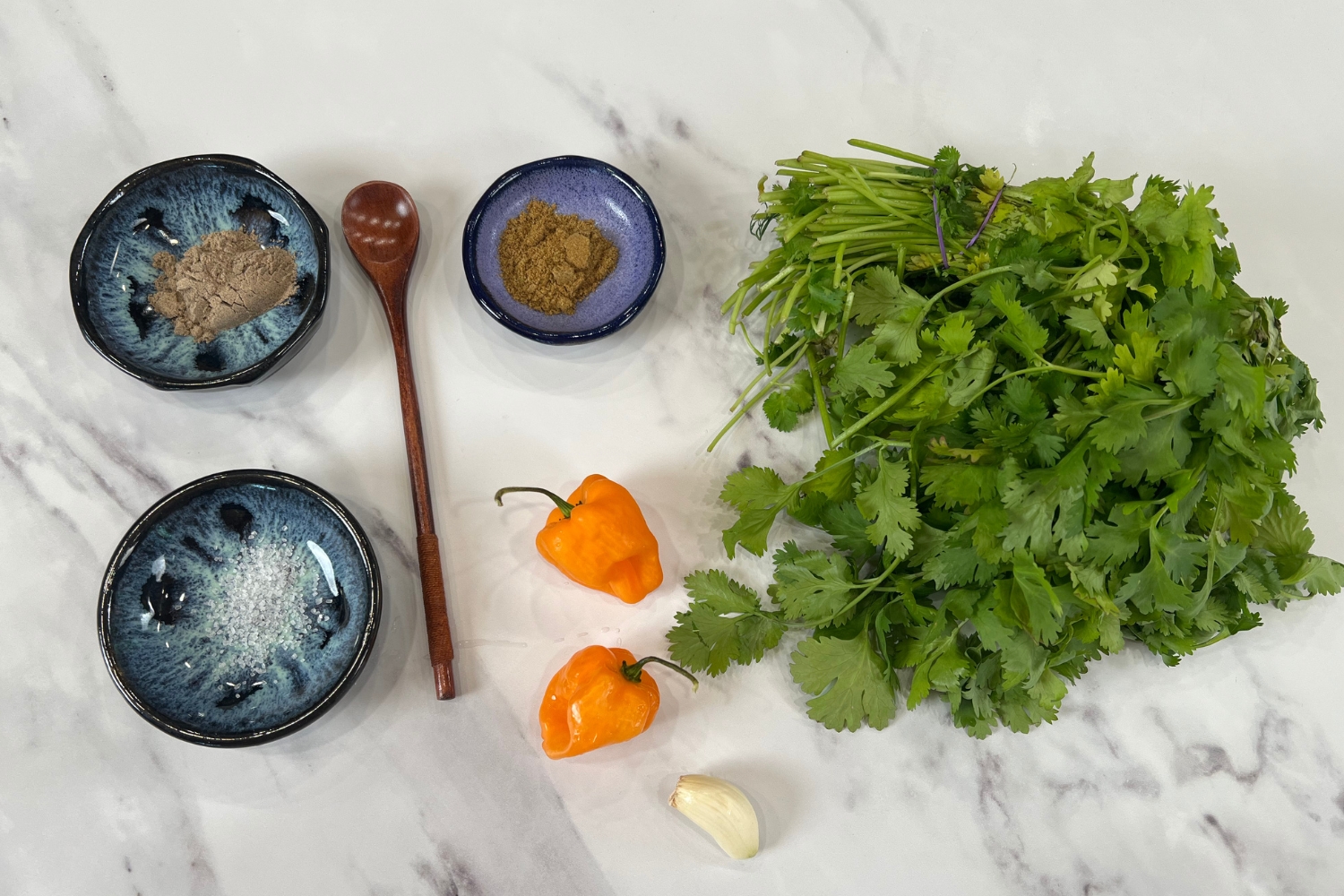
How to Make Zohar’s Skhug
Zohar’s version is beautifully simple. That’s another reason I like it so much.
You start with a bunch of cilantro, as fresh as you can possibly get it. Because cilantro makes up so much of this recipe, freshness really matters.
The hot peppers and garlic go into the food processor first. Pulse them to begin breaking them down.
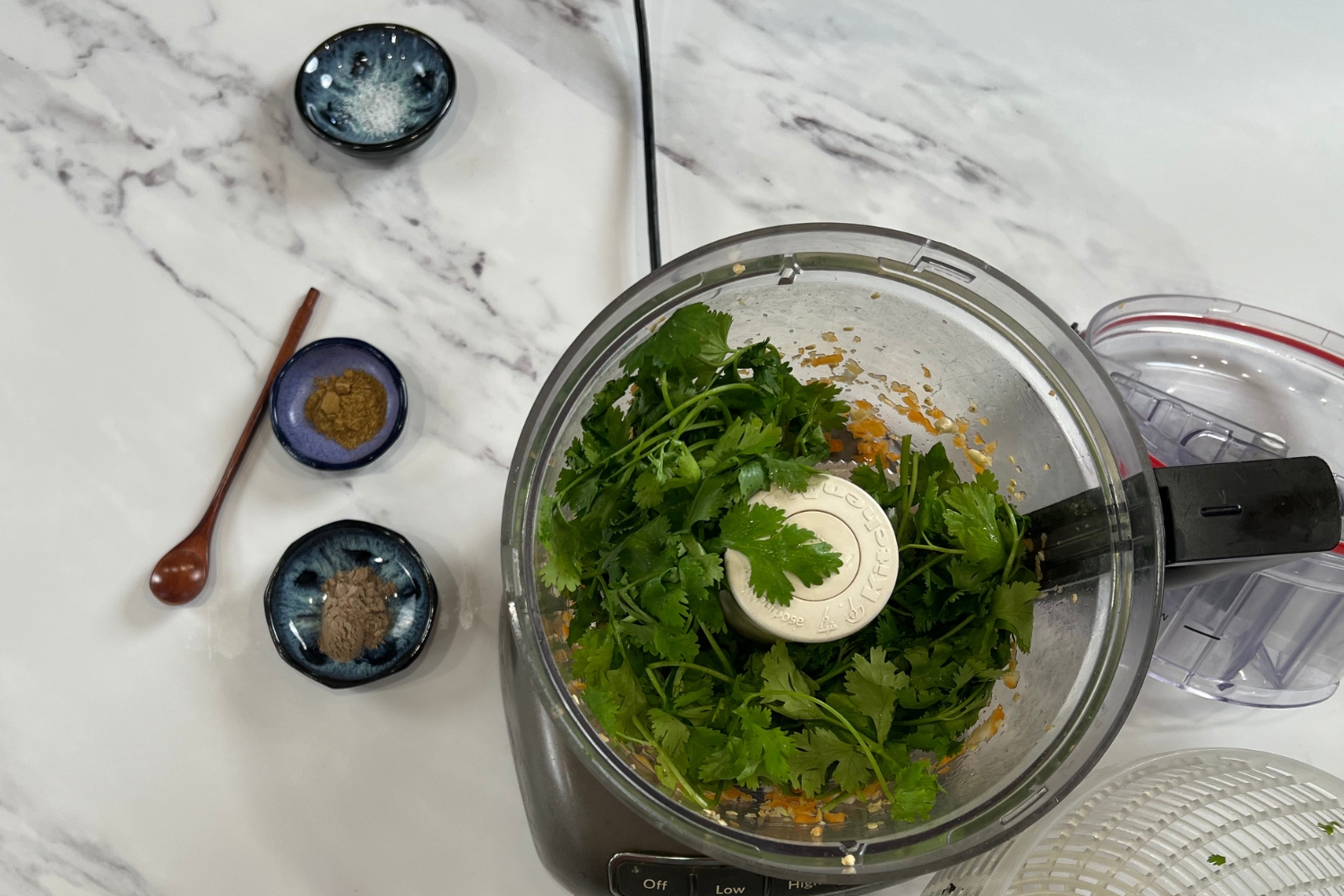
Next, start adding the cilantro.
Depending on the size of your food processor, the entire bunch may not fit at once. That’s fine. Add some cilantro, pulse it down, add some more, and keep going until you’ve worked in the whole bunch.
Then add the salt and spices.
Zohar uses cumin and cardamom, which give the sauce that wonderful earthy flavor underneath all that freshness and heat. Smoked cumin, if you can find it, adds another layer of flavor.
Continue blending until you get a consistency that’s somewhere between smooth and grassy.
If the mixture is too dry for your food processor to handle, add a little water or extra-virgin olive oil. You only need enough to help everything come together.
That’s it.
No cooking.
No complicated technique.
Just incredibly fresh ingredients ground together.
Skhug and the Mediterranean Diet
One of my favorite things about the Mediterranean Diet is how much flavor comes from herbs, spices, garlic, vegetables, citrus, and other plant foods.
Healthy food doesn’t have to mean bland food.
In fact, when people begin cooking more Mediterranean Diet recipes, I often encourage them to build up their collection of sauces, dressings, dips, and condiments.
Skhug is a perfect example.
A spoonful can add an enormous amount of flavor to a bowl of chickpeas and vegetables. Add it to hummus and pita. Spoon it over eggs. Put it on roasted cauliflower. Add it to a grain bowl with vegetables and beans. Serve it with grilled chicken or fish.
Suddenly a very simple meal becomes something you’re excited to eat.
That’s a huge part of eating well over the long term. If the food you’re eating is delicious and satisfying, healthy eating doesn’t feel like punishment.
What to Eat With Skhug
Once you have a jar of skhug in the refrigerator, you’ll probably start finding excuses to use it.
Try it with falafel, hummus, pita bread, shakshuka, eggs, roasted potatoes, grilled vegetables, chickpeas, lentils, chicken, fish, sandwiches, wraps, grain bowls, or even stirred into yogurt for a creamy spicy sauce.
I especially love the contrast between skhug and something creamy. Yogurt, tahini, hummus, or labneh can soften the heat while letting all those fresh herbal flavors come through.
And, of course, there’s warm pita.
Put warm, freshly baked pita in front of me with hummus and skhug and I’m pretty happy.
Make Skhug Your Own
Like so many traditional recipes, skhug is something you can adjust to your own taste.
Want it hotter? Add another pepper.
Want more garlic? Add another clove.
Want it looser? Add a little extra-virgin olive oil.
Want it chunkier? Pulse it less.
The most important thing is to start with really fresh cilantro and good hot peppers.
And don’t be afraid of the heat.
Maybe don’t jump straight to Hot Ones territory on your first batch, but give skhug enough heat to make it exciting.
That’s what this sauce is all about: freshness, spice, herbs, garlic, and a little bit of danger.
Just remember to wash your hands before you rub your eyes.

Skhug
Ingredients
- 1 bunch fresh cilantro
- 1 clove garlic
- 1-2 hot peppers, your choice, stems removed
- 1 pinch salt
- 1 teaspoon cumin, smoked if possible ground
- 3/4 teaspoon cardamom ground
- Water or extra virgin olive oil, as needed
Instructions
- Add the hot peppers and garlic to a food processor and pulse until finely chopped.
- Begin adding the cilantro. If the entire bunch doesn't fit, add some, pulse it down, then continue adding the rest.
- Add the salt, cumin, and cardamom.
- Process until the skhug is somewhere between smooth and grassy—you want it well blended but with a little texture remaining.
- If needed, add a small amount of water or extra-virgin olive oil to help everything blend.
- Taste and adjust the salt or heat as desired.
Nutrition
About the Author: Bill Bradley, R.D.